This post contains affiliate links. We may earn a small commission when you buy through our links — at no extra cost to you.
You’ve likely noticed that many substrates marketed ‘for shrimp’ are actually inert sands or gravels that don’t affect water chemistry. They don’t buffer pH, so Caridina keepers end up fighting rising hardness and failed molts. Only active buffering soils can maintain the soft, acidic conditions these shrimp need without constant chemical adjustments, and they also support healthy plant growth.
This guide cuts through the marketing, focusing on the two active soils that actually deliver stable parameters from day one. It also covers practical inert options for capping or budget tanks. By understanding grain size, dust levels, and nutrient longevity, you can avoid weeks of cloudy water and pH swings, and choose the perfect match for your tank.
Whether you’re breeding Caridina or aquascaping a high-tech planted tank, the right substrate is the foundation of success. These picks are backed by extensive keeper feedback, so you know they work.
Top Picks
Best for Caridina Planted
Fluval Plant & Shrimp Stratum
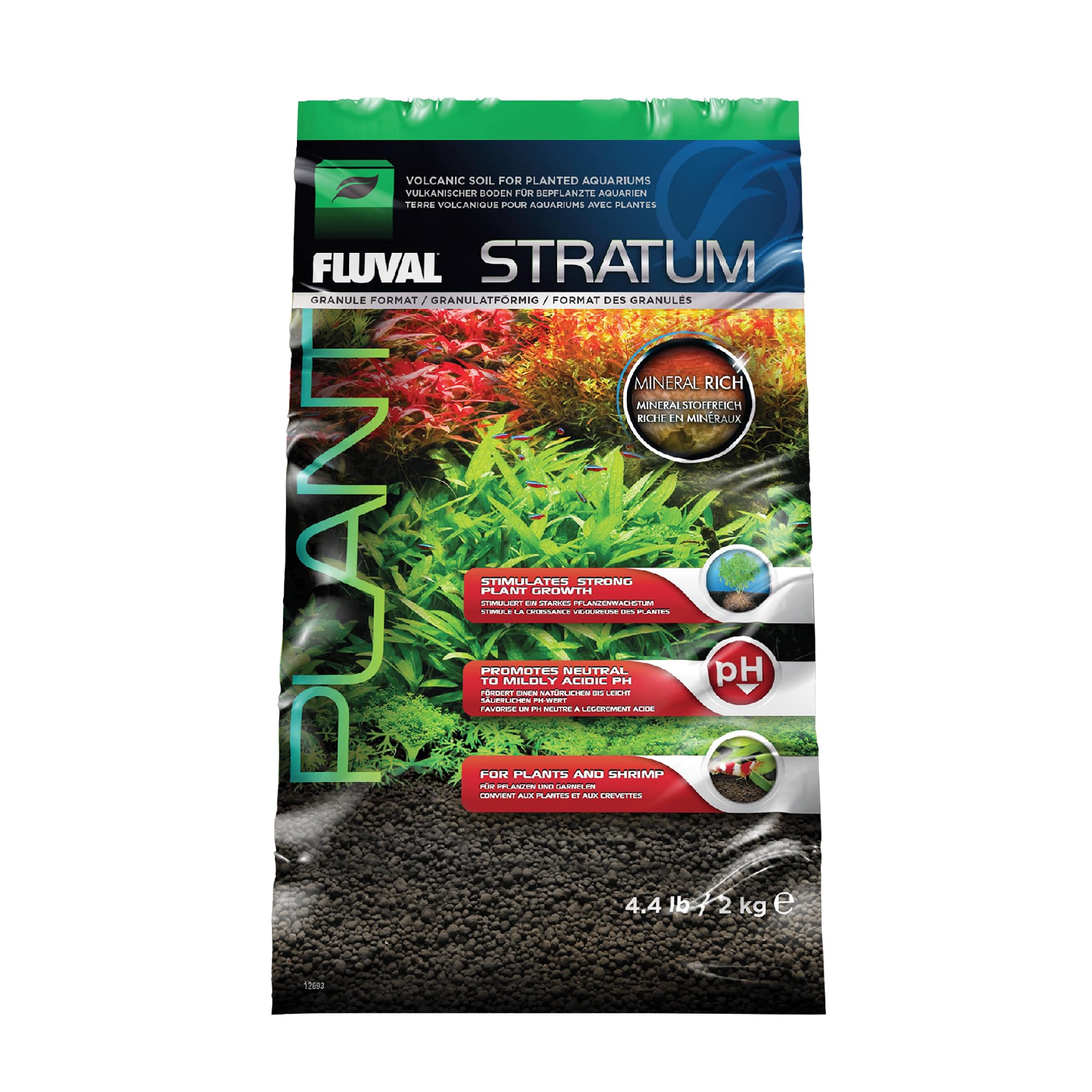
Rating: 4.7 ★ | Price: Mid-range | pH Buffering: Active (slightly acidic) | Grain Size: Porous granules | Dust Level: Cloudy 1-2 days | Nutrient Longevity: Initial nutrients, depletes months
Fluval Plant & Shrimp Stratum builds a stable foundation for plant roots and nitrifying bacteria. Its porous granules buffer pH to the slightly acidic range Caridina shrimp need, while supporting strong root development for carpeting plants.
This substrate suits Caridina keepers who want a buffered, planted tank without extra additives. Expect hazy water for a day or two after setup, and lightweight grains may lift unrooted stems — plant anchors or a deeper layer helps until roots establish.
Pros
- Supports strong root growth for carpeting plants and shrimp-friendly foliage.
- Porous granules create micro-havens that protect newborn shrimp from tank mates.
- Buffers pH to the slightly acidic range Caridina shrimp require for stable health.
Cons
- Water may appear cloudy for the first day or two after setup, even with rinsing.
- Lightweight grains can lift newly planted stems before roots take hold.
This is the substrate to start with for Caridina — it delivers pH stability and plant growth without guesswork.
Best for High-Tech Planted Caridina
Fluval Bio Stratum
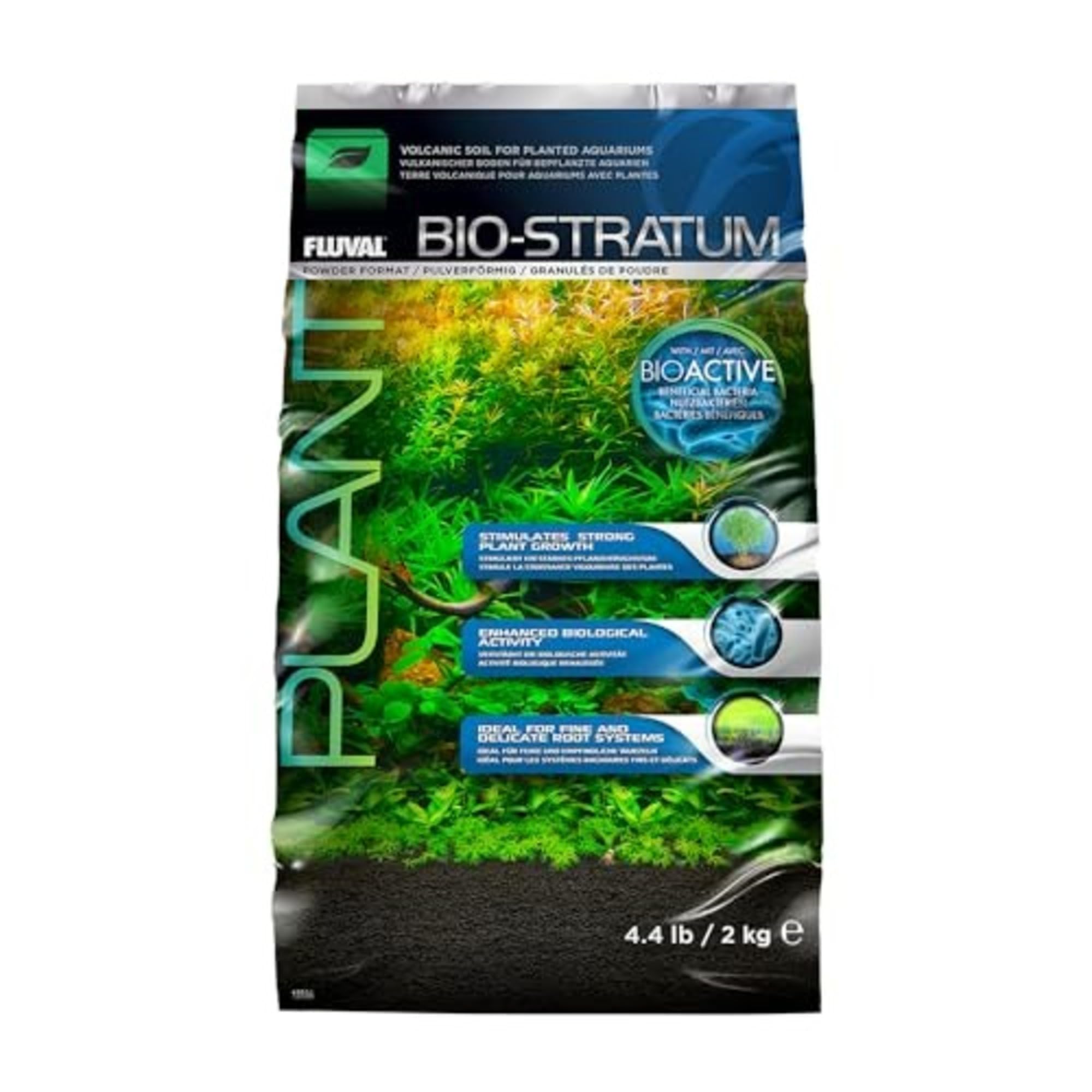
Rating: 4.7 ★ | Price: Mid-range | pH Buffering: Active (slightly acidic) | Grain Size: 1 mm powder | Dust Level: Cloudy 1-2 days | Nutrient Longevity: With dormant bacteria
Bio Stratum uses 1mm powder granules that let delicate root systems spread easily, and dormant nitrifying organisms speed the nitrogen cycle — reducing the waiting period for new planted Caridina tanks. A tradeoff: the fine powder can cause temporary water cloudiness for a day or two after setup, similar to the standard Stratum. This substrate is best for high-tech planted Caridina keepers who prioritize root penetration and rapid cycling over initial clarity.
Pros
- 1mm granules let sensitive roots penetrate without resistance
- Dormant nitrifying organisms shorten tank cycling time
- Buffers pH to slightly acidic, supporting stable Caridina conditions
Cons
- Per-pound cost is higher than the standard Stratum, less economical for larger tanks
For aquascapers targeting fast cycling and fine grain, this substrate delivers — the higher per-pound cost is the main tradeoff.
Best for Cap for Active Soil
Aqua Natural Sugar White Sand

Rating: 4.7 ★ | Price: Budget | pH Buffering: No (inert) | Grain Size: 0.5–1 mm sand | Dust Level: Low (very clean) | Nutrient Longevity: None (inert)
Triple-washed and kiln dried, this sand pours nearly dust-free and stays bright underwater, with a soft texture safe for bottom dwellers. The color shifts to tan/beige underwater, and lightweight grains won’t anchor plants without a cap. For Caridina requiring pH buffering, this inert sand is not suitable — use only as a decorative cap over active soil.
Pros
- Pours nearly dust-free with minimal rinsing effort
- Soft granules are gentle on bottom-dwelling fish and shrimp
Cons
- Under aquarium lighting, the sand may appear tan or beige rather than the pure white shown in marketing images
Best for aquarists who want a clean white cap over active soil for aesthetic contrast — not a substrate for Caridina shrimp that need pH buffering.
Best for Budget Neocaridina Tank
Aqueon Plant & Shrimp

Rating: 4.6 ★ | Price: Mid-range | pH Buffering: No (inert) | Grain Size: Clay spherical granules | Dust Level: Low (easy to clean) | Nutrient Longevity: Requires root tabs
This clay-based substrate supports plant growth and rinses clean with minimal clouding, offering a cost-effective alternative to active soils. However, it is inert and does not buffer pH, so it cannot maintain the stable soft acidic water that Caridina shrimp need. For long-term plant nutrition, root tabs are recommended.
Pros
- Supports plant growth and is safe for Neocaridina shrimp tanks.
- Easy to clean and vacuum with minimal clouding.
Cons
- Does not buffer pH – cannot maintain the stable soft acidic water parameters Caridina shrimp require.
Caridina keepers should choose an active buffering soil; this substrate works well for Neocaridina or planted tanks where pH control isn’t needed.
Best for Large Planted Tank
CaribSea Eco-Complete
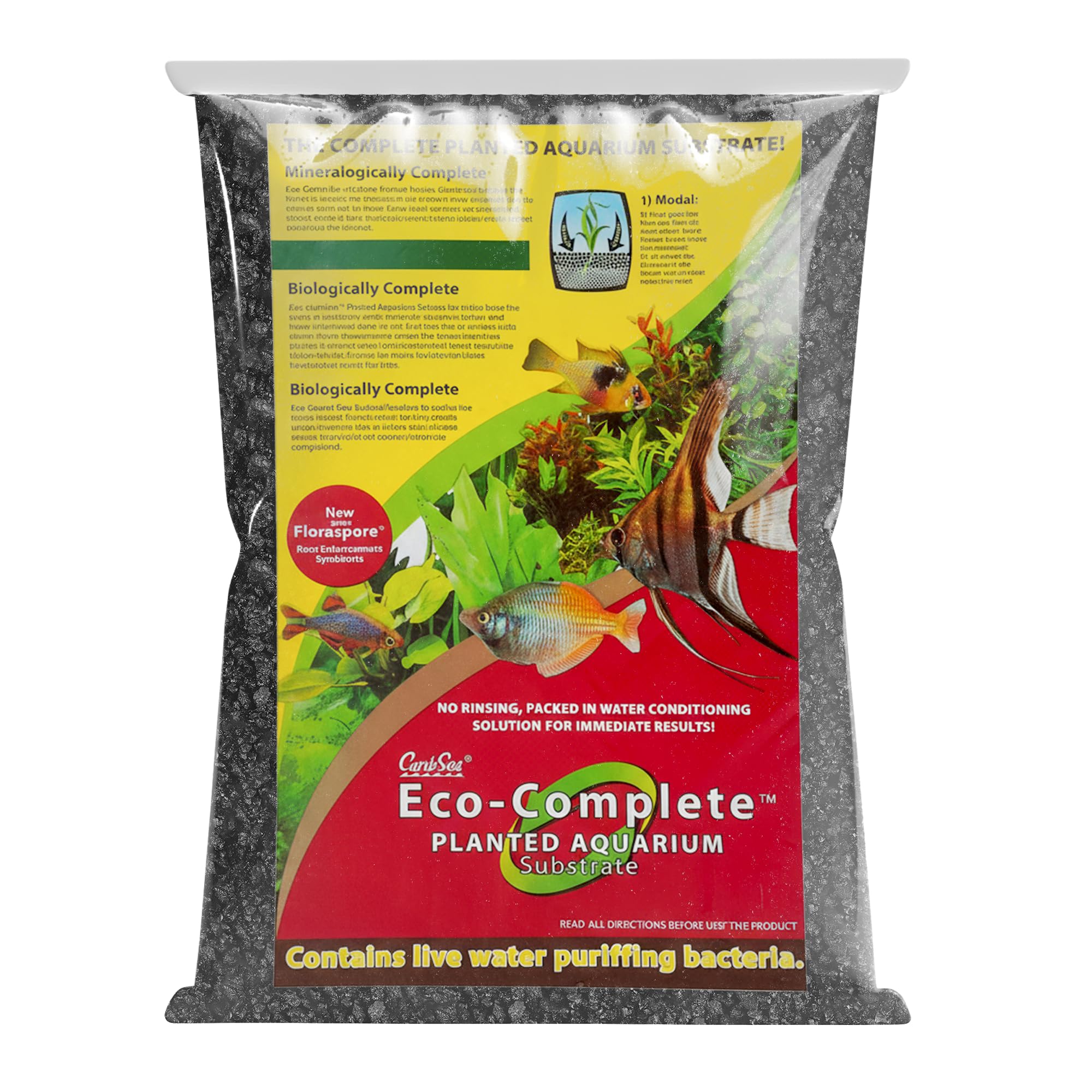
Rating: 4.6 ★ | Price: Premium | pH Buffering: No (inert) | Grain Size: Nutrient-rich gravel | Dust Level: Cloudy several days | Nutrient Longevity: Depletes, add tabs
The 20 lb bag delivers cost-effective volume for large planted tanks, with bacterial slush that can speed initial cycling. The dark gravel creates a clean aesthetic for Neocaridina or community fish. However, it does not buffer pH or maintain the soft acidic water parameters required by Caridina shrimp.
Pros
- Dark black gravel with natural highlights enhances tank aesthetics
- Included bacterial slush helps speed up the nitrogen cycle during setup
Cons
- Initial water cloudiness can last several days after the substrate is added
Best for large Neocaridina or fish-only planted tanks where pH buffering is not needed.
Best for Heavily Planted Tank
Seachem Flourite Black Gravel

Rating: 4.6 ★ | Price: Premium | pH Buffering: No (inert) | Grain Size: Porous clay gravel | Dust Level: Very dusty, 10+ washes | Nutrient Longevity: Absorbs liquid fert
The porous clay structure supports dense plant growth and stays stable for years. However, the bag is extremely dusty — expect multiple washes to clear — and water may stay cloudy for days. The inert composition provides no pH buffering, making it unsuitable as a standalone Caridina substrate.
Pros
- Strong root anchoring for dense plant growth
- Rich black color that enhances tank aesthetics
Cons
- Extensive rinsing needed; water may remain cloudy for days after washing
Best suited for heavily planted tanks with hardy fish or Neocaridina. Caridina keepers should pair it with an active buffering soil or choose a dedicated shrimp substrate.
Best for Aesthetic Planted Tank
Seachem Flourite Black Sand

Rating: 4.5 ★ | Price: Premium | pH Buffering: No (inert) | Grain Size: Ultra-fine sand | Dust Level: Extremely dusty, hours | Nutrient Longevity: Absorbs liquid fert
This crushed clay sand delivers a deep black backdrop that makes plants and fish pop visually. Plants root firmly within weeks. However, setup is labor-intensive: multiple rinses are needed and water may stay hazy for days. The inert material does not buffer pH, and some particles can be sharp — this sand is not appropriate for Caridina shrimp. It suits aquascapers prioritizing appearance over convenience in a non-shrimp planted display tank.
Pros
- Deep black color that strongly contrasts with green plants and shrimp
- Plants root well and establish quickly in the porous clay
Cons
- Requires extensive rinsing; water may remain cloudy for days despite multiple washes
A strong visual choice for planted tanks with non-caridina livestock, provided you are willing to invest significant setup time.
Best for Budget Neocaridina
Aqua Natural Galaxy Sand

Rating: 4.6 ★ | Price: Budget | pH Buffering: No (inert) | Grain Size: Sand | Dust Level: Significant cloudiness | Nutrient Longevity: None (inert)
The sparkly black appearance under aquarium lights creates an attractive visual effect. The bacterial additive may help speed up cycling, but the sand can cloud water for days after setup, and some bags have been noted to contain snails. Without pH buffering, this substrate is not suitable for Caridina shrimp that require stable water parameters.
Pros
- Sparkly black appearance adds visual interest under lights.
- Bacterial additive may help speed up the cycling process.
Cons
- Water cloudiness after setup can be significant, and occasional contamination with snails has been noted.
Suitable for budget Neocaridina tanks where sparkling sand is the goal, but not for Caridina shrimp that need active pH-buffering substrate.
Best for Capping or Terrarium
Aqua Natural Gold Pearl

Rating: 4.7 ★ | Price: Budget | pH Buffering: No (inert) | Grain Size: 2–4 mm gravel | Dust Level: Dusty, rinse well | Nutrient Longevity: None (inert)
This golden gravel provides a natural shimmer and 2–4 mm grain size that works well as a decorative cap. However, it is inert and does not buffer pH, making it unsuitable as a primary substrate for Caridina shrimp. Best used for capping active soil or in terrariums.
Pros
- Natural golden shimmer adds warmth to tanks without being flashy.
- 2–4 mm grain size works well for small fish and shrimp as a decorative layer.
Cons
- Grain size varies between pieces; some may be noticeably smaller or larger than expected.
A budget-friendly choice for adding a golden shimmer as a cap over active soil or in terrariums, but not suitable as a standalone Caridina shrimp substrate.
Best for Natural Riverbed Look
Aqua Natural Midnight Pearl

Rating: 4.7 ★ | Price: Budget | pH Buffering: No (inert) | Grain Size: 2–4 mm gravel | Dust Level: Minimal dust | Nutrient Longevity: None (inert)
The Midnight Pearl’s earthy brown coloration hides waste effectively and requires less rinsing than many natural gravels. However, it is an inert substrate with no pH buffering, and some granules have sharp edges that can harm soft-bodied shrimp or bottom feeders. This makes it a poor choice for Caridina setups, but a budget-friendly decorative top layer for low-tech tanks with hardy fish or as a cap over active soil.
Pros
- Earthy riverbed look that naturally conceals detritus.
- Minimal dust and easy to clean compared to similar gravels.
Cons
- Some pieces have sharp edges that can harm soft-bodied shrimp or bottom feeders.
A budget-friendly decorative cap for active soil in low-tech tanks, but not a standalone substrate for Caridina or sensitive species.
Best for Low-Budget Tank
Aqua Natural Diamond Black

Rating: 4.5 ★ | Price: Budget | pH Buffering: No (inert) | Grain Size: 1–2 mm sand/gravel | Dust Level: Very dusty, cloudy days | Nutrient Longevity: None (inert)
The sparkle under light and strong contrast against plants make this an eye-catching choice for budget-conscious builders. However, some bags may contain metal particles that can harm livestock, and the color leans lighter than pure black — limitations that rule out any tank with Caridina or sensitive species.
Pros
- Sparkles attractively under aquarium lighting
- Creates strong visual contrast for plants and fish
Cons
- Some bags may contain metal particles that can harm livestock
Fits low-budget tanks with hardy fish where sparkle matters more than color consistency or livestock safety.
How to Choose
The single most important factor for Caridina shrimp is pH buffering – without an active soil, you’ll constantly fight unstable water parameters.
pH Buffering
Active soils contain organic compounds that release tannic and humic acids, lowering pH and hardness to levels Caridina shrimp require. Inert sands and gravels lack this chemistry, meaning you’d need to dose acids or rely on CO2 injection to achieve the same effect.
The trade-off is that active soils exhaust their buffering capacity after 12–24 months. When pH starts creeping up, you’ll need to replace the substrate or cap it with fresh soil. For most Caridina keepers, this lifespan is acceptable given the stability it provides.
Grain Size
Grain size directly affects root penetration for live plants and foraging ease for shrimp. Fine powders (around 1 mm) allow delicate carpeting plants like Monte Carlo to spread without resistance, but they can compact over time and trap debris.
Coarser granules (2–4 mm) offer better water circulation through the substrate bed, reducing anaerobic pockets. However, heavy-rooted plants may struggle to anchor initially. Medium porous granules provide a balanced middle ground for most planted Caridina tanks.
Setup Effort (Dust)
Even ‘pre-washed’ active soils release fine dust that turns the water milky for 24–48 hours after flooding. Using a fine filter pad or floss and avoiding aggressive water changes during this period speeds clearing. Inert sands and gravels vary widely: some are triple-washed and pour clear, others require hours of rinsing.
If you’re impatient or need immediate visibility, look for products explicitly noted as low-dust. Otherwise, plan for a day or two of cloudiness as the substrate settles – disturbing it later can re-release trapped dust.
Nutrient Content and Longevity
Active soils come pre-loaded with organic nutrients that sustain plants for the first 6–12 months. After that, root tabs or liquid fertilizers become necessary. Inert substrates like sand or gravel have no inherent nutrients – plants rely entirely on added fertilization.
Some inert options like Seachem Flourite are porous and absorb dissolved nutrients from the water column, making them available to roots. But none replace the buffering ability of active soil. For Caridina, prioritize pH control first, then consider nutrient supplementation.
FAQ
Why does my Fluval stratum cloud the water so badly?
Fluval Stratum is made of porous clay granules that release fine dust during initial flooding. This is normal and not harmful to shrimp. Use a fine filter floss and avoid disturbing the substrate for 24–48 hours – the cloudiness will clear on its own. Running a polishing filter pad can speed up the process.
Can I use regular play sand for Caridina shrimp?
Play sand is inert and does not buffer pH, so it won’t maintain the soft, acidic water Caridina require. It may also introduce silicates that trigger diatom blooms. If you want a sandy look, use play sand only as a thin cap over an active soil like Fluval Stratum – never as the sole substrate for Caridina.
Is Seachem Flourite safe for Caridina shrimp?
Seachem Flourite is inert and does not buffer pH, making it unsuitable as a standalone substrate for Caridina. It is safe for Neocaridina and hardy shrimp, but the sharp edges of the clay particles can harm delicate Caridina, especially newly hatched shrimplets. Use it only if you are willing to add acidifying agents and monitor parameters closely.