This post contains affiliate links. We may earn a small commission when you buy through our links — at no extra cost to you.
A hang-on overflow box is the obvious way to add a sump to an undrilled tank, but the noise and plumbing quirks catch many buyers off guard. Most units require a gate valve, silencer, or DIY sealing before they perform as expected.
That doesn’t mean you should avoid them – it means picking the right one matters. Some models come with a hole saw for clean drilling, others include a lid to cut noise, and a few restart siphon reliably after a power cut. The key is matching the overflow to your tank type and willingness to tweak.
This guide focuses on overflows that keep water moving steadily – even after the lights go out – so you can set up a sump without surprises.
Top Picks
Best for Frameless Tanks
Eshopps Eclipse Slim L

Rating: 4.3 ★ | Price: $$$ | Max Tank Size: 150 gal | Flow Rate: ~700 GPH | Included Accessories: Hole saw, template, bulkhead | Noise Level: Moderate to loud
The Eclipse Slim’s included diamond hole saw and drilling template make it straightforward to add a sump to a frameless tank without buying extra tools. The 3-inch wide acrylic body fits tight spaces behind the tank and looks clean once mounted.
This kit suits hobbyists who want a polished frameless conversion and are comfortable sealing the supplied gaskets to prevent drips, and adding a gate valve for noise control. It delivers a premium build and complete package, but requires a bit of fine-tuning – a solid match for the DIY-minded aquarist.
Pros
- Works reliably on frameless tanks with simple installation
- Easy installation with included diamond hole saw and template
- Solid build quality and sleek appearance
Cons
- Gasket and bulkhead sealing can cause water seepage – may need replacement gaskets or sealant to avoid drips.
- Without a gate valve and tuning, gurgling noise can be present in quiet rooms.
The Eclipse Slim is the right call for the DIY aquarist who wants a complete kit and is prepared to fine-tune gaskets and plumbing – its slim profile and included hole saw offer a clean frameless conversion that other models don’t match.
Best for Pre-Drilled Tanks
Aqueon Overflow Kit

Rating: 4.5 ★ | Price: $$ | Included Accessories: Standpipes, bulkheads, return nozzle | Noise Level: Very quiet
Near-silent operation and a complete set of plumbing parts make this the go-to choice for owners of pre-drilled aquariums looking to add a sump. Unlike the top pick’s slim profile for frameless tanks, this kit prioritizes quiet reliability over flexibility – it cannot be used on undrilled tanks. Best for reefers and freshwater keepers with an existing drilled tank who want a hassle-free internal overflow without the gurgling or flushing sounds common to hang-on boxes.
Pros
- Works reliably and quietly on drilled tanks – no gurgling or flushing sounds.
- High-quality plastic components with clear, easy-to-follow installation instructions.
- Very quiet operation – one of the quietest overflow solutions available for sump systems.
Cons
- Bulkhead size may be too large for some canister filter connections – check compatibility first.
- Push-fit overflow tube can develop a slow drip; applying PVC cement resolves it.
For anyone with a pre-drilled tank, this kit delivers a quiet, complete overflow system with minimal fuss – just confirm your existing bulkhead size first.
Best for 40–75 Gal Tanks
Blue Ocean OF 600

Rating: 4.2 ★ | Price: $$ | Max Tank Size: 125 gal | Flow Rate: 600 GPH | Included Accessories: Foam strainer | Noise Level: Mixed – can be noisy
The Blue Ocean OF 600 maintains a continuous siphon that restarts after power loss, achieving this at a fraction of the cost of a polished kit. The hang-on design requires no drilling, and the 600 GPH flow rate is well-suited to 40–75 gallon aquariums, though it can handle up to 125 gallons. Some units arrive with unsealed baffles that can prevent full siphon; a 30-minute silicone fix resolves it permanently. This overflow box fits aquarists who prioritize value and don’t mind a one-time seal check.
Pros
- Self-priming siphon restarts after power outages without manual intervention.
- 600 GPH capacity at a price well below competitors with comparable flow rates.
- Hang-on installation works on undrilled tanks, avoiding the need for bulkhead drilling.
Cons
- Without an aftermarket muffler, gurgling or splashing sounds can be intrusive in quiet rooms.
For aquarists who prioritize value and don’t mind a quick seal check, the Blue Ocean OF 600 delivers consistent siphon performance that rivals far more expensive hang-on overflows.
Best for Diyers, Quiet Setup
YCA OF-Nano Overflow

Rating: 4.2 ★ | Price: $$ | Max Tank Size: 75 gal | Flow Rate: ~600 GPH | Included Accessories: Lid, foam sleeve | Noise Level: Reduced with lid
The YCA OF-Nano’s self-priming design and included lid reduce gurgling and evaporation, a rare combination at this price. It feels solidly built and operates quietly once properly plumbed.
Best suited for DIYers comfortable with minor adjustments. The bulkhead threads are non-standard, so replacing or adapting them from the start is recommended. Occasional packaging errors mean checking contents on arrival is wise – not a dealbreaker for those prepared to tinker.
Pros
- Self-priming design and lid reduce noise and evaporation in daily use.
- Solid build quality gives confidence in long-term durability.
Cons
- Occasional packaging errors can result in missing U-tubes or gaskets.
- Bulkhead threads are non-standard and may need replacement or adapters for standard PVC.
A capable overflow for hobbyists willing to invest a little setup time, but not the choice for a truly instant out-of-box experience.
Best for Nano Tanks ≤30G
Seapora Nano Overflow

Rating: 4.1 ★ | Price: $ | Max Tank Size: 30 gal | Flow Rate: 200–400 GPH
The Seapora Nano Overflow Box is the least expensive way to add sump filtration to a nano tank under 30 gallons. Setup is easy and it works well on small aquariums. However, the acrylic construction is fragile and needs careful handling, and the bulkhead uses non-standard threading that makes plumbing connections more involved. These limitations keep it from being a fit for larger tanks or anyone seeking a durable, long-term solution.
Pros
- Suits nano tanks up to 30 gallons and is easy to set up.
- Low-cost option to experiment with sump filtration.
Cons
- Acrylic body can crack and teeth may break; the wing nut is plastic and can strip with gentle force.
Buy this if you want to experiment with sump filtration on a nano tank without spending much, and you’re willing to handle delicate acrylic and non-standard plumbing.
Best for Moderate Flow
Eshopps PF-800
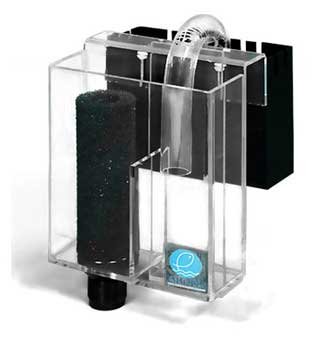
Rating: 4.2 ★ | Price: $$$ | Max Tank Size: 125 gal | Flow Rate: 800 GPH (claimed) | Noise Level: Loud out of box
The Eshopps PF-800 is solidly built and installs easily. Out of the box, gurgling is loud unless a DIY silencer is added, and sustained flow maxes out near 600 GPH, short of the 800 GPH rating. This makes it a fit for setups where moderate flow and a willingness to tinker are givens.
Pros
- Solid build quality and easy installation
- Stable flow and consistent siphon restart after tuning
Cons
- Gurgling noise can be intrusive in quiet rooms without a DIY silencer
- Sustained flow rate is closer to 600 GPH than the advertised 800 GPH
Suits users who plan to add a DIY silencer and operate at moderate flow (≤600 GPH). For quieter out-of-box operation, consider the Eclipse Slim or the self-priming option.
How to Choose
Most hang-on overflow boxes require additional tuning – a gate valve or silencer – to achieve quiet operation, so budget for that from the start.
Maximum Tank Size
The overflow’s rated max tank size tells you the upper limit, but it’s based on ideal conditions. A unit rated for 150 gallons may struggle to keep siphon on a 100-gallon tank if the return pump pushes near its limit.
Oversizing by one step gives you headroom for a larger return pump and reduces the risk of losing siphon during a power flicker. For a 75-gallon tank, a 125-gallon rated overflow is a safer choice than one rated for 75 exactly.
Flow Rate
Flow rate numbers printed on the box are optimistic – most units reach only 70-80% of the claimed GPH before air gets trapped in the U-tube. The practical max is what matters, and that usually appears in user reviews.
A good rule: choose an overflow rated at least 1.5x your return pump’s actual output. If your pump delivers 400 GPH after head loss, pick an overflow rated for 600 GPH or higher to avoid starving the pump or losing siphon.
Included Accessories
Some overflows arrive as a bare box with no plumbing fittings, forcing a trip to the hardware store for bulkheads and tubing. Others include a hole saw and template, which can save $30 and an hour of measuring.
The most valuable accessory is a gate valve – very few kits include one, yet adding a gate valve on the drain line is the single most effective way to tune noise and stabilize the siphon. Factor the cost of a gate valve ($15-$25) into your total budget.
Noise Level and Adjustability
No overflow box is truly silent out of the box. The gurgling sound comes from air being pulled into the drain line – a gate valve lets you restrict the flow just enough to eliminate the vortex without starving the return pump.
If you need a quiet setup in a living room, plan for a Herbie or Bean Animal drain configuration. That means dual drains and a gate valve on the main line. Single-drain overflows will always have some noise unless you add a standpipe or silencer.
Siphon Restart Reliability
After a power outage, a hang-on overflow must re-establish the siphon automatically or the return pump will run dry. Continuous siphon designs with a U-tube do this well, but only if the U-tube stays free of air pockets.
A strong return pump (≥5x the overflow’s rated GPH) helps purge air from the U-tube on restart. Some models include a foam sleeve or internal baffle to prevent air locks – those are worth the premium if you live in an area with frequent power dips.
FAQ
Why does my overflow box lose siphon after a power outage?
Air becomes trapped in the U-tube when the pump stops. To prevent this, make sure the U-tube is fully submerged at its highest point and that your return pump is strong enough to purge air on restart. Adding a gate valve on the drain line helps maintain a full siphon during normal operation, which reduces the chance of air pockets forming.
Can I use a hang-on overflow on a rimless (frameless) tank?
Yes, but only if the overflow is designed for it. Look for units with a slim profile and adjustable brackets that grip the glass without pressure points. The Eshopps Eclipse Slim is one example that comes with a hole saw for drilling the return line, which is necessary for rimless tanks where the typical intake weir won’t sit flush.
What size return pump do I need for a 600 GPH overflow box?
Choose a return pump rated for at least 400-500 GPH after head loss. A pump that pushes 600 GPH at zero head will likely deliver only 400-450 GPH once you account for the height of the tank and plumbing friction. That keeps the overflow comfortably below its max and avoids air bubbles in the U-tube.
Is it safe to drill my own aquarium for an overflow?
It is safe if you use a proper diamond hole saw, a drill guide, and keep the glass wet to prevent cracks. Tempered glass cannot be drilled – check the bottom pane and side panels before attempting. Many overflow kits include a template and bit, which significantly reduces the risk for a first-time driller.