This post contains affiliate links. We may earn a small commission when you buy through our links — at no extra cost to you.
Most bio filter media listings promise vast surface area, but the actual porosity varies widely—and filter compartments come in all shapes and sizes. You can’t just grab any bag of rings and expect it to work well.
The real decision often comes down to trading extreme porosity for easier maintenance and broader fit. Some media need heavy rinsing to remove dust, while others are too large for standard HOB slots.
This guide cuts through the marketing to recommend media that actually fits your filter and reliably houses bacteria, based on thousands of real-world experiences from freshwater hobbyists.
Top Picks
Best for Medium-Large Tanks
Fluval BioMax 500g

Rating: 4.8 ★ | Price: $$ | Media Type: Ceramic granules | Porosity: High | Piece Size: Large rings | Quantity: 500g | Compatibility: Fluval canisters 104 to FX6
Fluval BioMax’s ceramic rings rapidly host nitrifying bacteria, often establishing biological filtration within days of being added to a cycled tank. This quick colonization reduces the wait time for new aquariums and helps maintain stable water parameters during filter media changes.
Water clarity improvements are visible in some tanks within 24 hours of installation, and the durable ceramic granules maintain their structure for years without crumbling. Some owners report reusing the same batch through multiple tank setups, far outlasting the manufacturer’s suggested replacement interval.
This media suits Fluval canister filters from the 104 to FX6, and works well in medium to large freshwater tanks (20–100+ gallons) where filter compartments accommodate the larger ring size. For nano HOBs or compact internal filters with tight trays, the ring diameter may be too large – smaller ceramic media would be a better fit.
Pros
- Rapid colonization of nitrifying bacteria supports quick tank cycling.
- Durable ceramic material can be reused for years without performance loss.
- Water clarity improvements are possible within 24 hours of installation.
Cons
A consistent, long-lasting bio media for most freshwater setups – just confirm your filter compartment dimensions fit the rings.
Best for Heavy Bioload Tanks
Fluval BIO-FX 5L

Rating: 4.7 ★ | Price: $$ | Media Type: Ceramic blocks | Porosity: Very high | Piece Size: Large chunks | Quantity: 5 liters | Compatibility: Fluval FX canisters
The Fluval BIO-FX offers the highest surface area per volume among ceramic filter media in this comparison, making it the go-to choice for Fluval FX canister owners who want maximum bacteria capacity. While the top pick, Fluval BioMax, prioritizes ease of use and broad compatibility, BIO-FX trades that simplicity for extreme porosity — beneficial for heavily stocked tanks or sensitive species requiring superior biological filtration.
This media suits freshwater aquarists running Fluval FX4, FX5, or FX6 canisters who are willing to spend a few minutes rinsing the media before first use. The large irregular blocks fit comfortably in spacious filter trays but may not suit smaller filters like HOB units. For those who want plug-and-play convenience, BioMax remains the simpler choice.
Pros
- Highest surface area per volume for maximum bacteria colonization
- Resists clogging even under heavy use, maintaining flow over time
- Competitive pricing for the level of porosity offered
Cons
- Fine dust can require multiple rinses before the media is safe to add to the tank — skipping this step may allow grit into the system
- Large irregular blocks may not fit filter compartments with tight clearances, such as smaller HOB or internal filters
For Fluval FX owners seeking the highest possible biological filtration capacity, BIO-FX delivers — but only if you’re prepared for the extra prep work.
Best for Budget Bulk Filling
Marineland Rings 140ct

Rating: 4.7 ★ | Price: $ | Media Type: Ceramic rings | Porosity: Low | Piece Size: Standard rings | Quantity: 140 rings | Compatibility: Marineland C-series, Magniflow
The Marineland rings cut costs by using a denser, less porous ceramic – making them the most affordable bulk biological media per piece. They fill filter trays quickly without the premium price tag of competitors like Fluval BioMax.
Best for budget-conscious aquarists with large canister filters who don’t need maximum biological surface area per cubic inch. The lower porosity means you’ll need roughly twice the volume to match the bacteria capacity of premium porous rings – acceptable for low-to-moderate bioload tanks or as supplemental media mixed with more porous options. The rings drop into Marineland C-Series and Magniflow canisters without modification.
Pros
- Lowest per-piece price among bulk ceramic media – stretches a tight budget when filling large filter trays.
- Durable enough to hold shape through repeated rinsing cycles without crumbling.
- Drop-in fit for Marineland C-Series and Magniflow canisters – no cutting or custom sizing required.
Cons
This is the go-to option for large canister owners who prioritize cost over surface-area density.
Best for Sumps and Ponds
AQUANEAT 6lbs Rings

Rating: 4.7 ★ | Price: $$ | Media Type: Ceramic rings | Porosity: Moderate | Piece Size: 11/16" x 5/8" | Quantity: 6 lbs in 6 bags | Compatibility: Sumps, ponds, large canisters
Six pounds of ceramic rings pre-loaded into six zippered mesh bags gives large systems an immediate, hassle-free biological media bed. The ceramic structure provides ample surface area for nitrifying bacteria colonization, supporting cycle stability in freshwater tanks. Unlike some other bulk ceramic options that can arrive with smooth rings and lower porosity, this set maintains uniform texture. The mesh bags simplify removal and rinsing—just lift the whole bag instead of scooping loose rings.
This kit targets aquarists running large canisters, sumps, or ponds who prioritize value and convenience over premium aesthetics. A few rings may show harmless brown speckles or burn marks from the manufacturing process—purely cosmetic and not a functional concern. If such flaws would bother you, the top pick’s rings offer a cleaner appearance. For sheer quantity per dollar and ready-to-use packaging, it’s a standout in the category.
Pros
- Outstanding value per pound for a bulk 6lb ceramic media pack.
- Pre-loaded in zippered mesh bags eliminates loose ring handling—just place and rinse.
- Consistent ring texture provides reliable surface area for nitrifying bacteria.
Cons
- Occasional cosmetic defects—brown speckles or burn marks on some rings—do not affect filtration performance.
For large-system freshwater filtration where affordable volume and quick setup matter, the pre-bagged AQUANEAT pack delivers without unnecessary fuss.
Best for Small Canisters, Hob
Reefing Art 1lb Rings

Rating: 4.7 ★ | Price: $ | Media Type: Ceramic rings | Porosity: Good | Piece Size: 0.5" diameter | Quantity: 1 lb (≈180 rings) | Compatibility: Small canisters, HOB
An affordable biological media pack with visibly porous rings, the Reefing Art 1lb option delivers effective surface area for nitrifying bacteria at a low price. Unlike breakable bio blocks that can crumble in higher flows, these rings stay intact through rinsing and long-term submersion. While the top-pick media offers broader filter compatibility and more extensive long-term feedback, this pack undercuts it on cost and still supports a healthy nitrogen cycle without complication.
The 1lb bag fits freshwater setups with small to medium canister or hang-on-back filters, where its half-inch rings slip into tight trays without restricting water movement. For 10- or 20-gallon tanks, a single pack provides a full chamber’s worth of media with no leftover waste. Anyone running a large sump or heavy-bioload system should look at larger bulk packs instead, but for modest filters the quantity hits a practical sweet spot.
Pros
- Very affordable per pound compared to similar ceramic ring packs, keeping budget builds on track.
- Visible pores across each ring surface encourage rapid colonization by beneficial bacteria.
- Small 0.5-inch diameter slips easily into compact HOB and canister compartments without blocking flow.
Cons
For the aquarist who needs dependable bio media without spending much, the Reefing Art 1lb pack nails the balance of price and performance for small-filter setups.
Best for Nano and Hob
Sukh 3-Bag Rings 425g
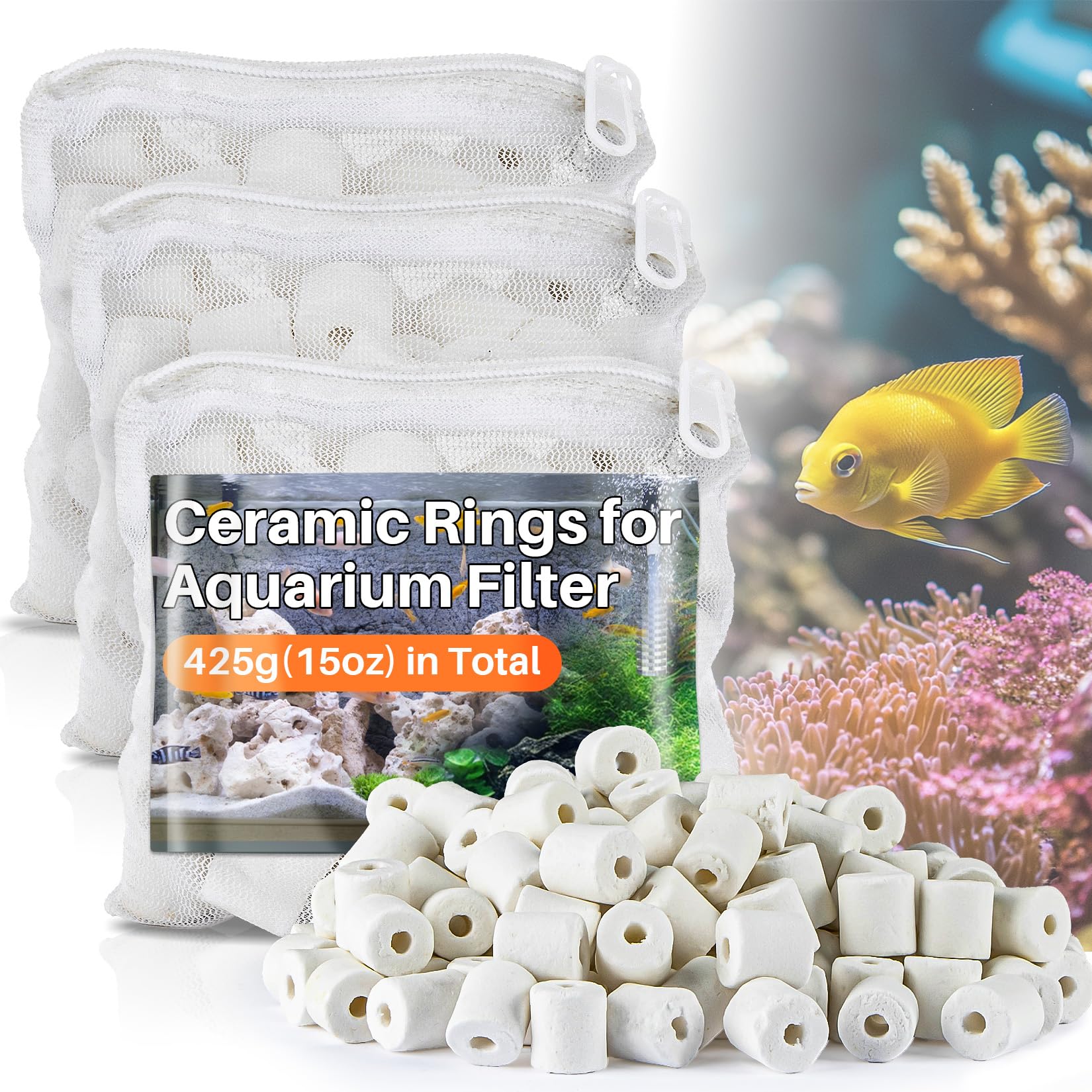
Rating: 4.7 ★ | Price: $ | Media Type: Ceramic rings | Porosity: Good | Piece Size: Marshmallow-sized | Quantity: 425g in 3 bags | Compatibility: Nano, HOB filters
These ceramic rings are marshmallow-sized, making them one of the few bio media options that drop into tight HOB slots and nano canisters without jamming. The 425g pack arrives split into three mesh bags, so you can place one in each compartment or stagger replacement without dumping loose media. For small filters where every cubic inch counts, this design avoids the frustration of rings that are too large to settle properly.
This set works best for 10–20 gallon tanks, especially with HOB or small canister filters that can’t accommodate bulky ceramic rings. The compact size is a deliberate tradeoff – these rings are noticeably smaller than typical bio media, which may disappoint anyone accustomed to larger pieces or hoping to fill a big canister tray. If you’re running a large sump or FX-class filter, the 425g volume and ring size will likely leave you short. For nano setups, however, the convenience of pre-bagged media and the space-efficient shape make this a practical choice.
Pros
- Compact size fits easily into tight HOB and nano canister compartments
- Good build quality with smooth, consistent rings
- Comes pre-bagged in three mesh bags for drop-in convenience
Cons
- 425g pack is too small for large canister filters; suited mainly for tanks under 20 gallons
The most practical bio media choice for small freshwater filters – the pre-bagged rings save hassle, but the limited quantity and small size mean it’s genuinely suited for compact tanks only.
Best for Pond Spillways
AQUANEAT 1" Bio Balls 100ct

Rating: 4.5 ★ | Price: $$ | Media Type: Plastic bio balls | Porosity: Low | Piece Size: 1 inch | Quantity: 100 balls in 2 bags | Compatibility: Pond spillways, large canisters
These bio balls keep water clear and are simple to rinse and reuse indefinitely. However, their tendency to float makes them unsuitable for fully submerged filter compartments—they are best used in pond spillways, wet/dry towers, or large canisters where floating is not an issue. For standard freshwater aquarium canister filters that require media underwater, this is not the right pick.
Pros
- Keeps water clear – effective for biological filtration in ponds and large tanks.
- Easy to clean and maintain – rinse and reuse indefinitely.
Cons
- 1-inch size may be too large for smaller HOB filters – limits placement options.
Ideal for pond spillways or trickle towers where floating media is acceptable—skip this for submerged freshwater filters.
Best for Custom Sump Layouts
Reefing Art 24pc Blocks

Rating: 4.7 ★ | Price: $$ | Media Type: Ceramic blocks | Porosity: High | Piece Size: 4" long breakable | Quantity: 24 blocks (≈1.75 lbs) | Compatibility: Sump, DIY setups
The Reefing Art ceramic blocks deliver deep pore structure that supports nitrifying bacteria growth in freshwater sumps. Their breakable design allows cutting to fit irregular compartments, a clear advantage over uniform rings. However, durability can be inconsistent — blocks may arrive with cracks or crumble under high water flow, which limits their suitability for high-pressure canister filters. This media suits aquarists who prioritize shape customization over long-term structural consistency.
Pros
- Deep pore structure provides ample surface area for nitrifying bacteria colonization.
- Blocks can be broken or cut to custom sizes for irregular filter compartments.
Cons
- Some blocks may arrive broken or crumble over time in high-flow setups.
Best for custom sump builds where shape flexibility matters more than long-term durability.
Best for Ultra-Compact Nano
MarinePure Gems 90g

Rating: 4.6 ★ | Price: $$$ | Media Type: Ceramic gems | Porosity: Extremely high | Piece Size: Marble-sized | Quantity: 90g (≈75 gems) | Compatibility: Nano tanks under 5g
The MarinePure Gems deliver an exceptionally high surface area-to-volume ratio, making them one of the most efficient bio media options for tiny filters. However, with just 90 grams at a premium price, this media is only cost-effective for aquariums under 5 gallons—larger setups will find better value in bulk ceramic rings or blocks. In high-flow environments the irregular gems may produce ceramic dust, but this is less of a concern in the low-flow nano filters this product targets.
Pros
- Extremely high surface area per gram maximizes bacterial colonization in minimal space.
- Ideal for nano tanks where standard ceramic rings or blocks may not fit.
Cons
- In high-flow setups, the gems can break down into ceramic dust over time.
- Expensive per gram compared to bulk ceramic rings, limiting value to very small tanks.
Best reserved for nano aquariums under 5 gallons where filter space is tight and every square inch of surface area counts—for larger systems, stick with cheaper bulk media.
Best for Large Canisters, Ponds
JIH 4lbs Rings
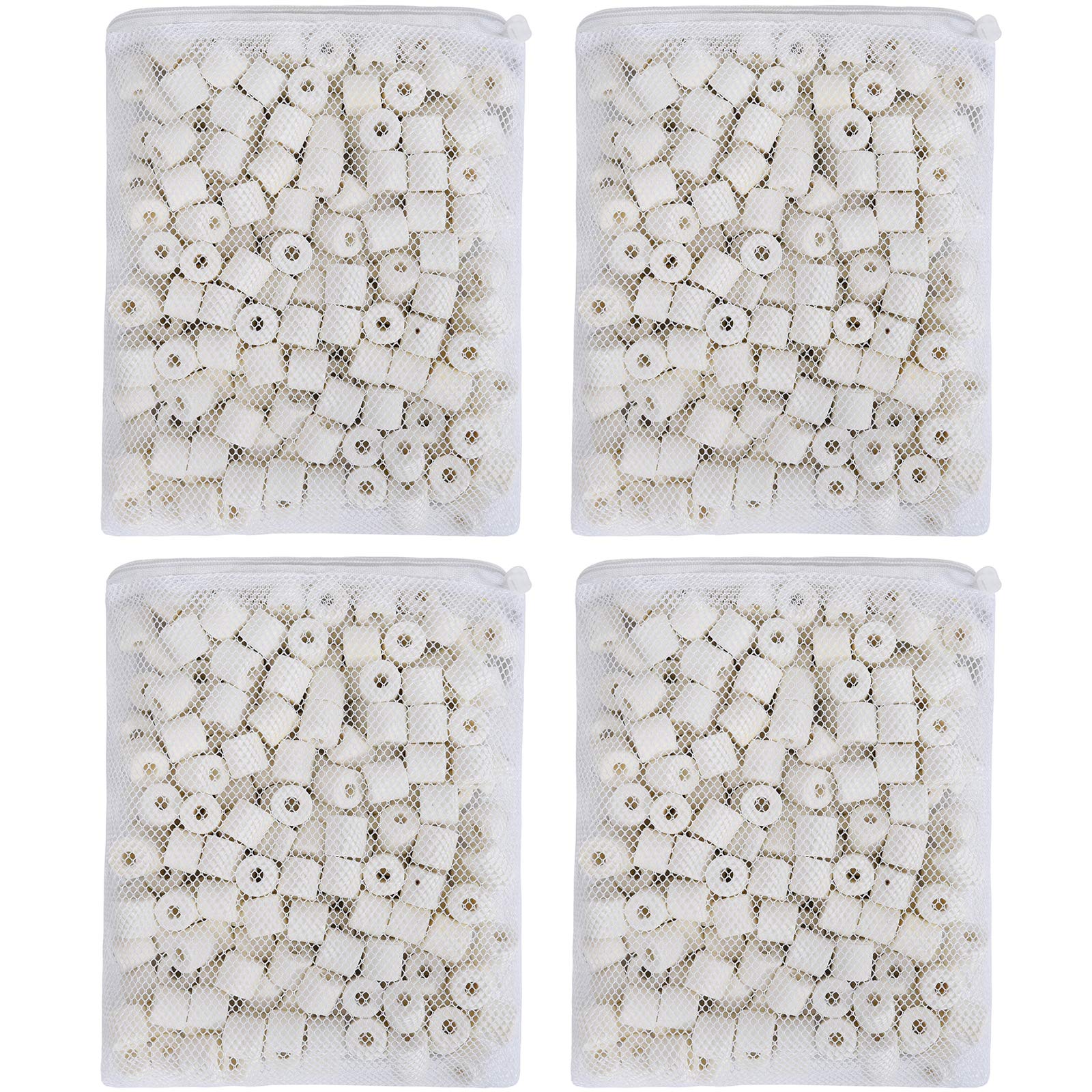
Rating: 4.7 ★ | Price: $$ | Media Type: Ceramic rings | Porosity: Porous | Piece Size: 1/2" x 1/2" | Quantity: 4 lbs | Compatibility: Large canisters, ponds
JIH’s 4-pound bulk rings offer good value for filling large canisters and pond filters without major complaints. The porous ceramic provides adequate surface area for beneficial bacteria. However, unlike some alternatives that come pre-bagged, this media is sold loose — a consideration if you prefer drop-in convenience. It doesn’t outperform similarly priced options like the AQUANEAT 6lb rings, but for straightforward bulk filling, it gets the job done.
Pros
- 4-pound quantity fills large filter compartments affordably.
- Porous rings support rapid colonization of nitrifying bacteria for stable water quality.
Cons
- Sold loose — requires mesh bags or DIY containment for easy handling.
For pond and large canister owners who want straightforward bulk media and don’t mind scooping their own, this is a no-fuss, cost-effective choice.
Best for Supplemental Media
ALEGI 2lbs Spheres

Rating: 4.7 ★ | Price: $$ | Media Type: Ceramic spheres | Porosity: Moderate | Piece Size: Small marbles | Quantity: 2 lbs | Compatibility: Canisters, sumps
These marble-sized ceramic spheres offer decent surface area for nitrifying bacteria at a price per pound that’s hard to beat. They work well as supplemental media in canisters or sumps where water parameters are already stable. However, some batches may shift water chemistry — pH spikes or ammonia surges have been noted after adding the media. For that reason, this is a better fit for hardy fish setups than for tanks with sensitive species or newly cycling systems.
Pros
- Affordable price per pound for filling large filter compartments.
- Works well as extra bio media in canisters and sumps.
Cons
- Water chemistry changes — pH or ammonia spikes — are possible in some aquarium setups.
Best for aquarists with stable, hardy-fish tanks who want an inexpensive way to supplement existing bio media — avoid for sensitive species or cycling tanks.
How to Choose
The most overlooked factor when buying bio filter media is whether the individual pieces actually fit inside your filter compartment.
Media Type
Media type determines how the pieces pack together and how much water flows around them. Ceramic rings offer a classic balance of surface area and flow, while blocks and spheres pack tighter but can restrict water movement if stacked too densely.
For most canister and HOB filters, ceramic rings are the safest choice. Bio balls work best in wet/dry systems where they tumble, but they float and don’t excel in submerged filters.
Porosity
Porosity is the internal pore structure that houses nitrifying bacteria. Higher porosity means more surface area per volume, but it often comes with a trade-off: extremely porous media can shed dust on first rinse or break down over time.
Budget rings from some brands are nearly solid, so you need twice the volume to match the bacteria capacity of a high-porosity option like Fluval BIO-FX or MarinePure Gems. Check reviews for specific porosity complaints.
Piece Size
Measure the height and width of your filter basket before buying. Many ceramic rings are ½ to ¾ inch in diameter and won’t fit into the narrow slots of small HOB filters or nano canisters.
Large blocks like hygger’s 6.2-inch logs require a sump or oversized canister. If your filter compartment is tight, look for rings labeled as small (0.5-inch or less) or media specifically designed for nano tanks.
Quantity or Weight per Dollar
Bulk packs of 4 to 6 pounds are the most cost-effective for large filters and ponds, but only if you actually need that much media. Overbuying fills space without improving filtration and wastes money.
For a 20-gallon tank, a 1-pound bag is usually sufficient. For a 75-gallon canister, 4 to 6 pounds gives you a good fill. Always buy by weight that matches your filter’s media capacity.
Compatibility
Some media is designed for specific filter brands. Fluval BioMax rings clip into Fluval canister trays, and Marineland rings are sized for their C-series baskets. Using mismatched media can lead to bypass flow.
Generic media works in almost any filter as long as the pieces are small enough to fit. Check the filter’s recommended media volume and shape—round rings move well in cylindrical baskets, blocks stack better in square sumps.
FAQ
Why is my ceramic filter media floating in the canister?
Most ceramic media is denser than water and should sink. If it floats, it’s likely plastic bio balls or a lightweight material. Some rings trap air inside their pores initially; soak them in tank water for 24 hours and they’ll sink. If they still float, replace them with proper ceramic rings.
How often should I really replace bio filter media in a freshwater tank?
Ceramic media rarely needs replacement. Rinse it in dechlorinated tank water during water changes to remove debris. Replace only if it physically crumbles or becomes clogged—typically every 2–5 years. Ignore marketing that suggests monthly swaps.
Can ceramic filter rings raise the pH of my aquarium water?
Some ceramic media can leach minerals that slightly raise pH, especially in soft water. Most brands are inert after an initial rinse. If you have sensitive fish like discus or crystal shrimp, soak new media for a week with water changes before adding to the tank.
Do I need to rinse new bio rings before putting them in my filter?
Yes, always rinse new ceramic media under running tap water until the water runs clear. Many media produce fine dust during manufacturing that can cloud your tank and even damage pump impellers. Fluval BIO-FX is especially dusty—rinse thoroughly in a bucket.