This post contains affiliate links. We may earn a small commission when you buy through our links — at no extra cost to you.
A canister filter for a 55-gallon tank should run quietly and keep water clear without drama. But too many models arrive with promises of ‘silent’ operation that turn into a constant hum or gurgle within weeks, while others develop seal leaks or pump failures that turn routine maintenance into damage control.
The real challenge is separating honest performance from marketing specs. Flow rates are often measured without media, and noise depends heavily on how the filter is primed and arranged. This guide cuts through that noise to highlight filters that deliver on their actual use case — whether that’s a low-bioload planted tank or a cichlid setup that needs heavy turnover.
Every pick here has been vetted by thousands of real owners, so the trade-offs between flow, quietness, and long-term reliability are clear from the start. You’ll know exactly what you’re getting before you hit order.
Top Picks
Best for Community Tanks, Moderate Load
Fluval 307
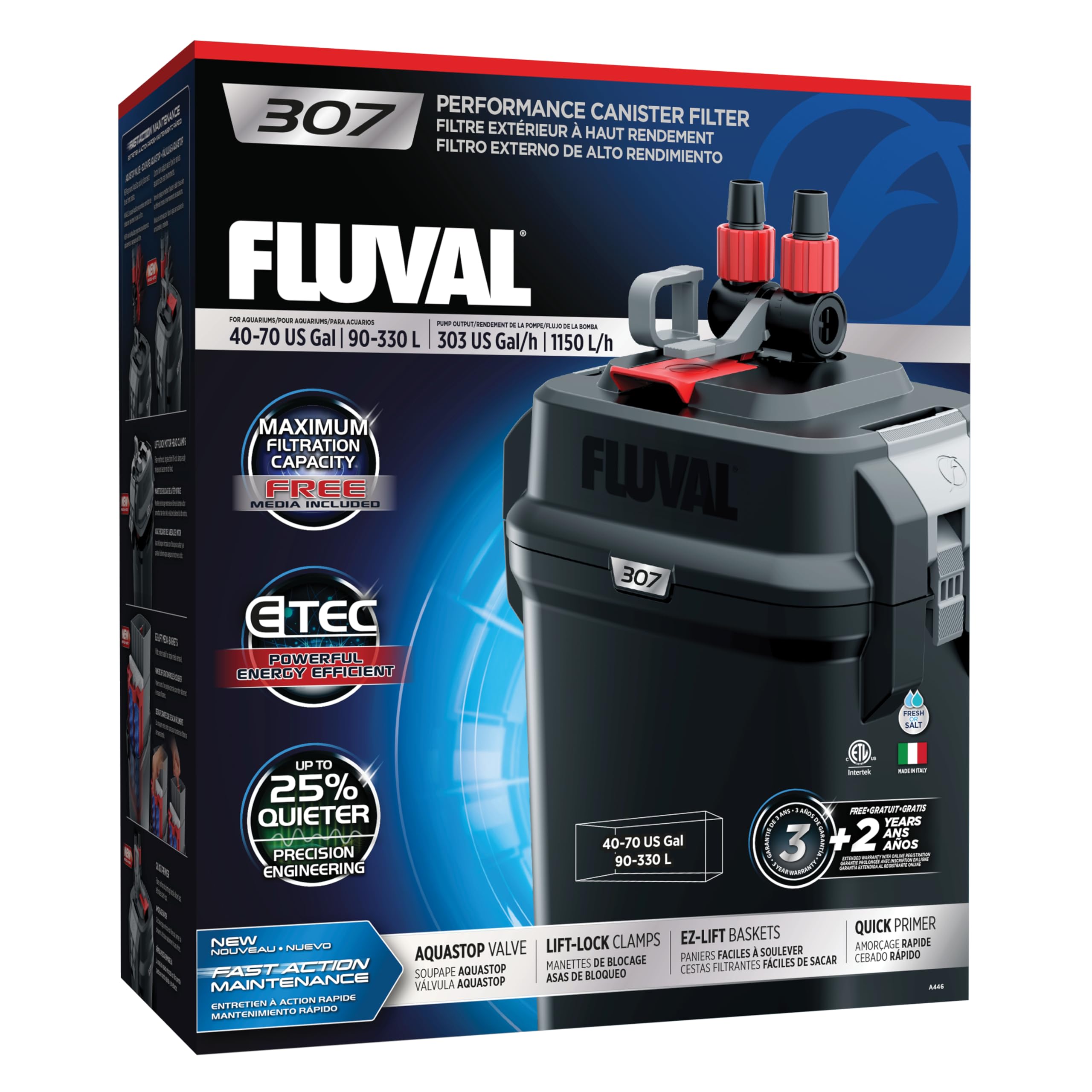
Rating: 4.5 ★ | Price: $$ | Flow Rate: 304 GPH | Tank Capacity: Up to 70 gal | Noise Level: Very quiet | Maintenance Ease: Tool-free clamps | Leak & Build Quality: Occasional seal issues
The Fluval 307 runs quietly enough for a bedroom, and the tool-free clamps make opening the canister for cleaning a genuinely quick task. Flow at 304 GPH turns over a 55-gallon tank roughly five times per hour — adequate for community fish with moderate bioload, without blasting plants or stirring up the substrate.
This filter suits aquarists who want a balanced performer from a brand with broad support and replacement parts. The tradeoff: some units may develop seal-related leaks or motor issues over time, so checking the gasket during setup and keeping a warranty extension in mind is sensible. Heavily stocked tanks needing higher flow should look at the larger FX series instead.
Pros
- Runs quietly enough for placement in a living room or bedroom
- Tool-free clamps and removable media baskets simplify routine cleaning
- Effective mechanical, chemical, and biological filtration for moderate bioloads
Cons
- In some units, the lid seal or clamp may allow small drips — inspect closely during first setup
- Motor or primer issues have been noted on occasional units, making a warranty extension worth considering
For a standard 55-gallon community tank, the Fluval 307 delivers quiet operation, straightforward maintenance, and adequate flow at a fair mid-range price — just take a moment to check the seal on arrival.
Best for Value, Uv Control
SunSun Hw303B
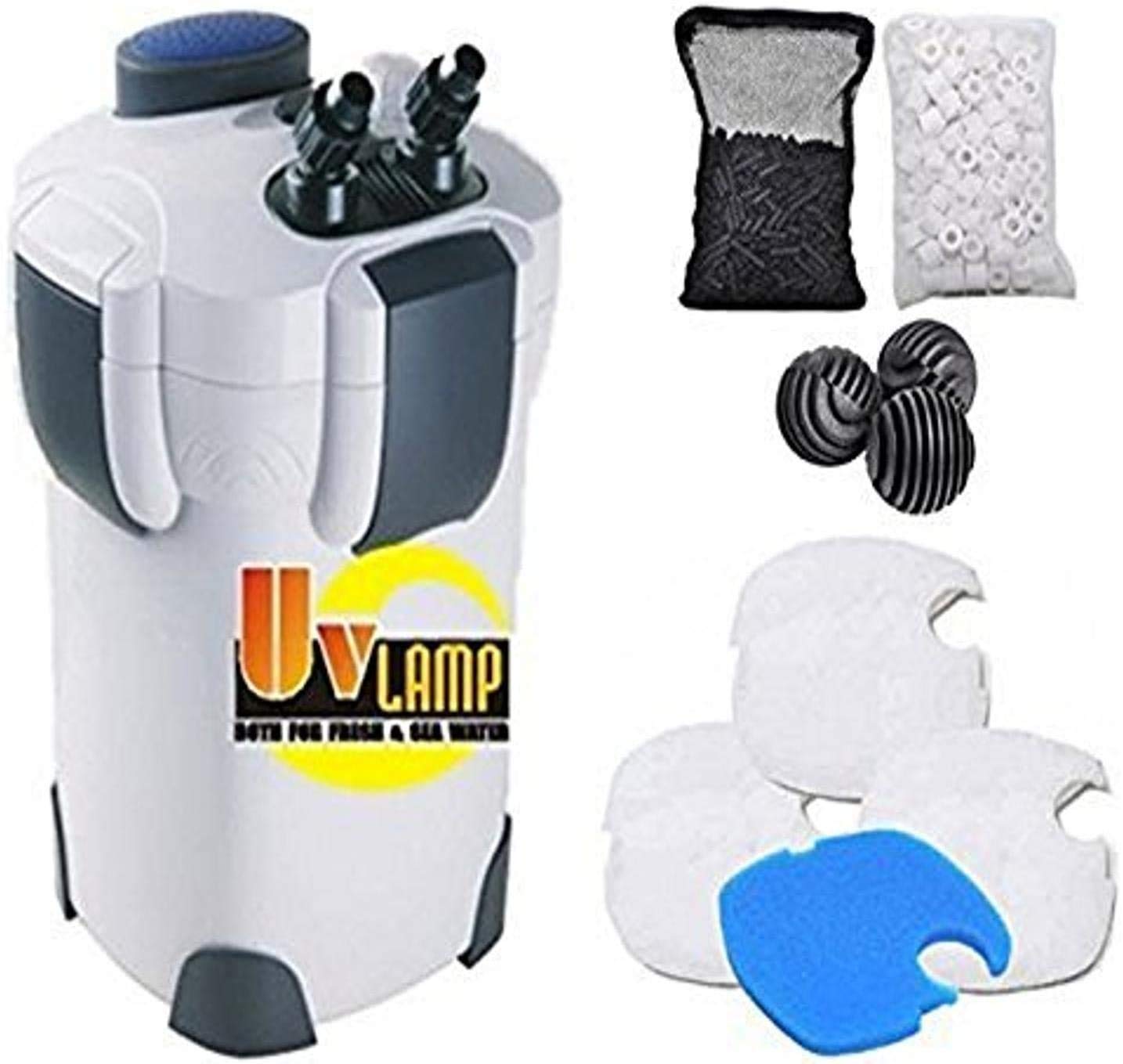
Rating: 4.3 ★ | Price: $$ | Flow Rate: 370 GPH | Tank Capacity: Up to 100 gal | Noise Level: Very quiet | Maintenance Ease: Easy setup, quick disconnect | Leak & Build Quality: Plastic parts feel cheap
The SunSun Hw303B delivers 370 GPH flow and a built-in 9W UV sterilizer at a mid-range price — feature density that the top pick can’t match. Build quality is a step down: plastic parts feel less substantial and the UV bulb may arrive damaged, so a quick inspection on arrival is wise. This filter suits value-focused owners of 55-gallon tanks with moderate to heavy bioloads who want high flow and UV without spending for premium materials.
Pros
- Flow rate clears a 55-gallon tank quickly, handling moderate to heavy bioloads with ease.
- Built-in 9W UV sterilizer is rare at this price — helps control algae and pathogens.
- Runs nearly silent, and setup is straightforward for a canister filter.
Cons
- Plastic fittings and housing feel less durable than higher-priced alternatives — worth checking for cracks on arrival.
For a 55-gallon tank with moderate to heavy bioload, the SunSun Hw303B is the value leader when UV sterilization is a priority — as long as you’re comfortable with a less premium feel.
Best for Convenience, Heater
OASE BioMaster 250

Rating: 4.3 ★ | Price: $$$ | Flow Rate: 250 GPH | Tank Capacity: Up to 70 gal | Noise Level: Gurgling common | Maintenance Ease: Removable pre-filter | Leak & Build Quality: German build, air issues
For aquarists who want to keep the tank interior free of heaters and value quick filter cleaning, the BioMaster 250 delivers. Its 150W heater maintains even temperatures, and the EasyClean pre-filter slides out for rinsing — no need to open the canister. However, the pump can pull in air, causing gurgling that disrupts quiet rooms. The premium price reflects the innovation and build quality, but the noise tradeoff makes it a better fit for those who prioritize maintenance ease over silent operation.
Pros
- Built-in 150W heater eliminates a separate tank heater, saving space and providing even heat.
- Removable EasyClean pre-filter allows quick cleaning without opening the canister.
- German engineering results in a sturdy, well-constructed filter.
Cons
- Air purging can produce gurgling noise, noticeable in quiet living areas.
- Premium pricing may not feel justified if noise becomes a recurring issue.
Best suited for aquarists who prioritize heater-free aesthetics and easy maintenance over absolute quiet — the noise is a real consideration in silent rooms.
Best for Heavy Loads, Future Upgrade
Fluval FX4
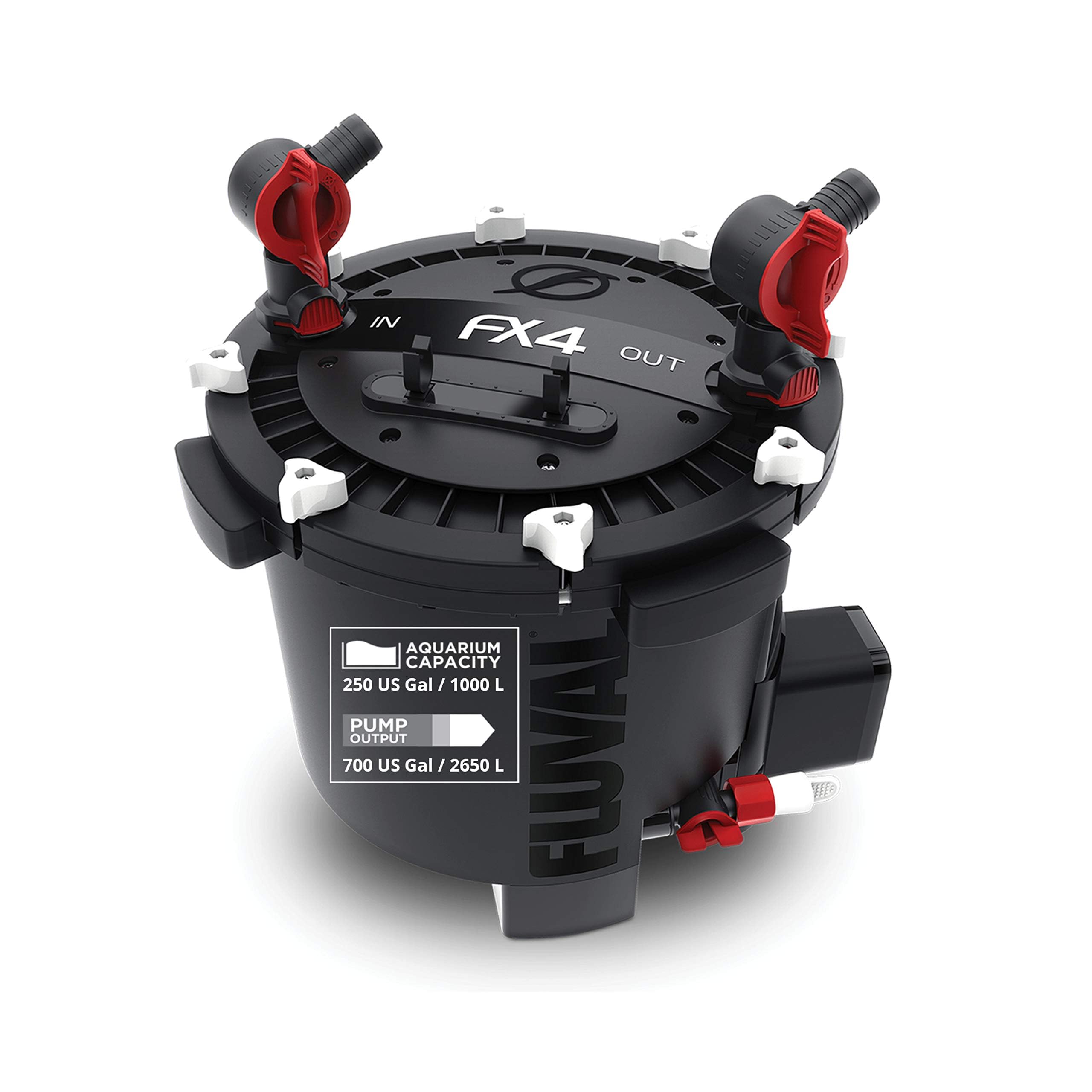
Rating: 4.5 ★ | Price: $$$ | Flow Rate: 700 GPH | Tank Capacity: Up to 250 gal | Noise Level: Quiet for power | Maintenance Ease: Self-priming, smart pump | Leak & Build Quality: Motor issues reported
With 700 GPH flow and a full gallon of media capacity, the FX4 handles messy fish like cichlids or turtles without breaking a sweat. Its self-priming Smart Pump makes setup nearly effortless, and noise levels stay low for a filter this large. For a standard 55-gallon community tank, though, the footprint and output are more than most need — the top pick delivers quieter operation and easier maintenance at a more reasonable size.
This filter shines for aquarists stocking heavily or planning a move to a larger tank. The tradeoff is a premium price and a unit that may require a flow-restricting spray bar or valve adjustment to avoid turning a 55-gallon into a washing machine. Motor consistency has been noted in some long-term reports, making a setup check worthwhile.
Pros
- High flow and media volume manage heavy bioloads with ease
- Quiet operation for a high-output canister
- Self-priming pump simplifies initial setup and restarts
Cons
- In a standard 55-gallon community tank, the flow and footprint are more than needed — consider dialing back the output
- Motor performance can vary between units over extended use
A serious choice for heavy bioloads or future upgrades, but overkill for a typical 55-gallon community tank.
Best for Budget, Planted Tanks
Penn-Plax Cascade 700

Rating: 4.3 ★ | Price: $$ | Flow Rate: 185 GPH | Tank Capacity: Up to 65 gal | Noise Level: Inconsistent humming | Maintenance Ease: Easy setup | Leak & Build Quality: Cracking housing common
The Cascade 700’s 185 GPH flow rate is deliberately gentle – a benefit for planted tanks and community setups with modest fish populations, where aggressive turnover isn’t needed. This focus keeps the price lower than the top pick, making it an attractive starting point for budget-conscious aquarists. However, the same flow that suits planted tanks can leave a 55-gallon tank under-filtered when stocking levels rise, and occasional reports of cracked pump housings mean the unit deserves careful handling during disassembly.
Pros
- Crystal-clear water quality that suits planted and low-stocked tanks.
- Value-oriented pricing that undercuts most alternatives without sacrificing basic filtration.
Cons
- In a heavily stocked 55-gallon tank, the 185 GPH flow may not maintain adequate turnover – better suited to light bioloads.
- Some units have displayed cracks in the pump housing – worth inspecting the casing during setup and handling gently.
The Cascade 700 is a sensible choice for planted tank enthusiasts and first-time canister buyers with small fish loads. For heavily stocked tanks, a higher-flow alternative is a safer investment.
Best for Silence over Longevity
Aqueon QuietFlow

Rating: 4.3 ★ | Price: $$ | Flow Rate: ~200 GPH | Tank Capacity: Up to 55 gal | Noise Level: Very quiet | Maintenance Ease: Quick disconnects | Leak & Build Quality: Short lifespan
Exceptional silence and tool-free maintenance make this filter one of the easiest to live with. However, the motor may need replacement after several months, making this a short-term solution best for aquarists who prioritize a quiet tank and plan to swap filters annually.
Pros
- Very quiet operation
- Easy to maintain with quick-disconnect hoses
Cons
- Self-priming behavior varies – manual intervention may be needed
Best for aquarists who prioritize silence and are comfortable replacing the filter every year to maintain performance.
How to Choose
The right canister filter for a 55-gallon tank isn’t the one with the highest flow number — it’s the one that matches your bioload, noise tolerance, and willingness to clean it.
Flow Rate
Flow rate (GPH) determines how many times the tank volume circulates per hour. For a 55-gallon tank, aim for 4–6 times turnover — roughly 220–330 GPH. Higher flow clears debris faster but can create a current that stresses slow-swimming fish or uproots plants.
Manufacturers often rate flow without media, so a filter rated 370 GPH may drop to 250 GPH once packed with sponges and ceramic rings. That’s why a model like the 304 GPH Fluval 307 actually delivers usable flow in a typical setup.
Tank Capacity Rating
Manufacturer tank capacity ratings are optimistic — they assume light bioload and perfect conditions. A filter rated for 70 gallons will handle a 55-gallon community tank well, but one rated for 250 gallons is overkill unless you’re keeping messy fish like cichlids or turtles. Oversized filters use more power, take up cabinet space, and may need flow reducers to avoid blasting fish.
Noise Level
Noise comes from three sources: the motor, water flow, and air trapped in the canister. A filter that’s quiet on day one can develop a hum if the impeller gets dirty or air builds up. Models with self-priming or easy air-purge valves (like the Fluval FX4) reduce gurgling. For bedrooms, look for filters where at least 80% of reviewers call it ‘silent’ — the Fluval 307 and SunSun Hw303B both meet that bar.
A common hidden trade-off: the quietest filters often have lower flow, because they run smaller impellers. If you need high flow, noise rises proportionally.
Ease of Maintenance
Canister filters need cleaning every 4–8 weeks depending on bioload. The main friction is disconnecting hoses and accessing media. Quick-release valves save time and reduce water spills. A pre-filter sponge on the intake dramatically extends the interval between full cleanings — this single $5 add-on is the best maintenance hack in the hobby.
Filters with modular media baskets (like the Fluval 307) let you clean one stage at a time without disturbing biological media. Others, like the OASE BioMaster, have a removable pre-filter that can be rinsed in seconds.
Leak Resistance and Build Durability
Leaks are the #1 fear with canisters. Most are caused by dried-out O-rings, loose hose clamps, or cracked housing. Filters with metal clamps and thick-gauge plastic (e.g., Fluval 307, OASE) tend to survive years. Budget models like the Penn-Plax Cascade 700 have reports of stress cracks around the pump base — a risk if you’re on a second floor or near electronics.
Durability also shows up in motor longevity. Some entry-priced units fail within months (see: PONDFORSE, Marineland Magniflow), turning a $60 filter into a $60 lesson. Spending $150–200 upfront often saves replacing it every year.
FAQ
Why does my canister filter keep losing prime and making gurgling noises?
This usually happens because air gets trapped in the canister or hoses — often after cleaning if the lid isn’t sealed perfectly, or if the intake strainer is partially blocked. Most filters have a priming button or valve to purge air. If noise persists, check that the O-ring is clean and lubricated, and ensure the filter is below the tank. Regular maintenance prevents air buildup.
How often should I clean a canister filter on a 55-gallon tank?
For a standard community tank with moderate bioload, clean the mechanical media (sponges, pads) every 4–6 weeks and rinse the biological media (ceramic rings, bio-balls) every 8–12 weeks in old tank water. Using a pre-filter sponge on the intake can stretch that to 8 weeks between full cleanings.
Can a canister filter with a built-in heater replace my aquarium heater?
Yes, but with caveats. Built-in heaters (like the OASE BioMaster’s 150W unit) are convenient because they free up tank space and heat water evenly as it passes through. However, if the heater fails, you won’t know until the tank cools — always keep a secondary thermometer and backup heater. For a 55-gallon tank, a single 150W built-in heater may struggle in a cold room, so it works best for temperature-stable environments.
Is 185 GPH enough flow for a 55-gallon planted tank?
Yes — that’s about 3.4 times turnover per hour, which is gentle enough to avoid uprooting plants or stressing fish. Planted tanks often benefit from lower flow to avoid CO2 off-gassing. The Penn-Plax Cascade 700’s 185 GPH is ideal for a heavily planted 55-gallon community setup, but it won’t handle heavy fish loads or messy eaters.