This post contains affiliate links. We may earn a small commission when you buy through our links — at no extra cost to you.
African cichlids need a substrate that doesn’t alter water chemistry or leach harmful coatings. Many decorative gravels sold as ‘aquarium safe’ have caused sudden fish deaths when their paint flakes off.
Natural, inert substrates—like uncoated gravel or sand—eliminate that risk entirely. They hold up to cichlid digging, resist cloudiness after proper rinsing, and keep pH stable.
The right choice depends on grain size and color preference, but the core rule is simple: stick with natural materials from reputable brands to protect your fish and maintain a great-looking tank.
Top Picks
Best for Natural Riverbed Look
Aqua Natural Gold Pearl 10 lb

Rating: 4.7 ★ | Price: Mid-Range | Grain Size: 2–4 mm | Type: Natural stone | Dust Level: Low | pH Effect: Inert
The 2–4 mm grains are uniform enough to rinse quickly, and the natural golden shimmer adds depth without artificial dyes. Dust content can vary between bags, with some requiring a more thorough rinse than expected — but most find the initial cleaning manageable compared to painted alternatives.
This gravel is best suited for African cichlid setups that benefit from an inert, pH-stable substrate. The natural stone won’t leach toxins or alter water chemistry, making it safe for fish that need alkaline conditions. It also works well in community tanks where a natural riverbed look is desired.
Pros
- Natural golden shimmer brightens the tank without artificial dyes.
- Uniform grain size simplifies cleaning and reduces waste trapping.
- Cost-effective alternative to premium natural gravels with comparable appearance.
Cons
- Dust content may vary between bags, occasionally requiring a more thorough rinse than expected.
For African cichlid keepers wanting a natural, safe, and visually appealing substrate, this gravel delivers on all fronts without the risks of coated alternatives.
Best for Hides Waste
Aqua Natural Midnight Pearl 10 lb

Rating: 4.7 ★ | Price: Budget | Grain Size: 2–4 mm | Type: Natural stone | Dust Level: Low | pH Effect: Inert
This brown gravel’s natural tones effectively hide waste, keeping tanks looking tidy between cleanings. It has the lowest per-pound cost among inert natural gravels, making it a strong budget alternative to the top pick Gold Pearl. For African cichlid setups, the 2–4 mm grain size works well for burrowing species, and the inert pH won’t disrupt alkaline water. The gravel may release cloudiness if not rinsed before use, so a quick rinse is recommended for those sensitive to sediment.
Pros
- Natural brown color with lighter highlights conceals waste effectively.
- Requires minimal rinsing thanks to low dust content out of the bag.
Cons
The best value for a natural-looking, waste-hiding cichlid gravel — suits budgets that want a functional substrate without overspending.
Best for Bright Natural Sand
Aqua Natural Sugar White Sand 10 lb

Rating: 4.7 ★ | Price: Mid-Range | Grain Size: 0.5–1 mm | Type: Natural sand | Dust Level: Very low | pH Effect: Inert
This sand arrives remarkably clean, requiring minimal rinsing compared to most aquarium substrates. The fine, soft grains are gentle on fish like cories and loaches, and the off-white color makes fish pop. However, its light weight and small grain size mean it gets easily sucked up during gravel vacuuming, and digging cichlids can suspend it, clouding the tank. It’s a solid choice for aquascapers seeking a natural bright base or for tanks with bottom-dwellers, but not for active cichlid setups that need a heavier substrate.
Pros
- Requires very little rinsing due to minimal dust straight from the bag.
- Soft, rounded grains protect sensitive barbels and fins of bottom-dwellers.
- Bright off-white color enhances fish colors and creates a clean, natural look.
Cons
- Fine sand is easily drawn into gravel vacuums, making routine cleaning trickier.
Choose this sand for its exceptional cleanliness and gentle texture if your tank houses soft-finned species and you don’t mind a bit more care during water changes. Skip it if you keep digging cichlids or prefer faster vacuuming.
Best for Sparkle Effect
Aqua Natural Diamond Black 10 lb

Rating: 4.5 ★ | Price: Mid-Range | Grain Size: 1–2 mm | Type: Natural stone | Dust Level: Variable | pH Effect: Inert
The Aqua Natural Diamond Black delivers a striking sparkle under lighting with its 1–2 mm grain size bridging sand and gravel. It is inert and won’t alter pH, making it suitable for African cichlid tanks. Color consistency varies between bags, with some containing brown or white flecks, and occasional cloudiness may appear after setup. This makes it a good fit for aquarists who want a natural sparkly substrate and aren’t concerned about a perfectly uniform black floor or temporary cloudiness.
Pros
- Sparkling black appearance adds dramatic contrast under aquarium lights.
- 1–2 mm grain works well as a topper or base for mixed substrate layers.
- Inert – does not affect water pH, safe for freshwater cichlids.
Cons
A visually dramatic substrate for high-contrast scapes, best chosen by cichlid keepers who value natural sparkle over uniform color and can manage the occasional cloudiness.
Best for Bio-Start Boost
Aqua Natural Galaxy Sand Bio 5 lb

Rating: 4.6 ★ | Price: Mid-Range | Grain Size: Fine sand | Type: Natural sand + bacteria | Dust Level: Moderate (initial) | pH Effect: Inert
This sand’s live bacteria colony reduces the waiting period for a new tank to become fish-ready, while the black sparkle gives a dramatic backdrop for plants or fish. The 5 lb bag is practical only for tanks under 10 gallons; larger cichlid setups would need multiple bags at a high per-pound cost. Initial cloudiness can take a few days to settle, so patience is required after setup. This substrate suits nano-tank keepers or those starting a small cichlid species tank who want a biological boost and a dark aesthetic.
Pros
- Accelerates the nitrogen cycle with live bacteria
- Sparkling black appearance enhances contrast in planted tanks
Cons
- Initial cloudiness may persist for several days after setup
- 5 lb bag size limits use to small tanks; cost per pound is high for larger setups
A good choice for nano tanks needing a biological head start, but for most cichlid keepers the top pick Gold Pearl gravel offers better value and scale.
Best for Nano Tank Boost
Aqua Natural Sugar White Bio 5 lb

Rating: 4.6 ★ | Price: Mid-Range | Grain Size: 0.5–1 mm | Type: Natural sand + bacteria | Dust Level: Low | pH Effect: Inert
This sand is seeded with beneficial bacteria to speed up tank cycling and settles quickly with minimal cloudiness. However, the 5-pound bag is expensive per pound, the fine sand can be challenging to clean with a gravel vacuum, and the color may appear tan underwater. It’s essentially a smaller version of Aqua Natural’s regular Sugar White Sand with added bacteria, making it overpriced for larger tanks.
Pros
- Pre-seeded bacteria speeds up cycling in new tanks.
- Settles quickly with minimal cloudiness after setup.
Cons
- Fine sand may be difficult to clean with a gravel vacuum.
This works well for nano tanks under 10 gallons where a quick cycle is critical and the premium cost per pound is less of a factor.
Best for Heavily Planted Tanks
Seachem Flourite Black Clay 15.4 lb

Rating: 4.6 ★ | Price: Premium | Grain Size: Porous gravel | Type: Clay (nutrient-rich) | Dust Level: High | pH Effect: Inert
The Seachem Flourite Black Clay Gravel provides a stable, nutrient-dense base for root-feeding plants. Its porous structure supports root development without altering pH. However, the gravel requires thorough rinsing to avoid cloudiness, and for tanks without substantial plant life, the premium cost and effort are hard to justify — making it a niche choice for planted cichlid setups.
Pros
- Roots flourish in the nutrient-rich clay structure.
- Deep black color adds visual contrast to planted tanks.
Cons
- Dust can cloud the tank unless the gravel is rinsed several times.
Best for the dedicated planted-tank keeper who wants a nutrient base for rooted plants and is willing to rinse extensively — not for sparsely planted or non-planted cichlid setups.
Best for Planted Aquariums
Seachem Flourite Black Sand 15.4 lb
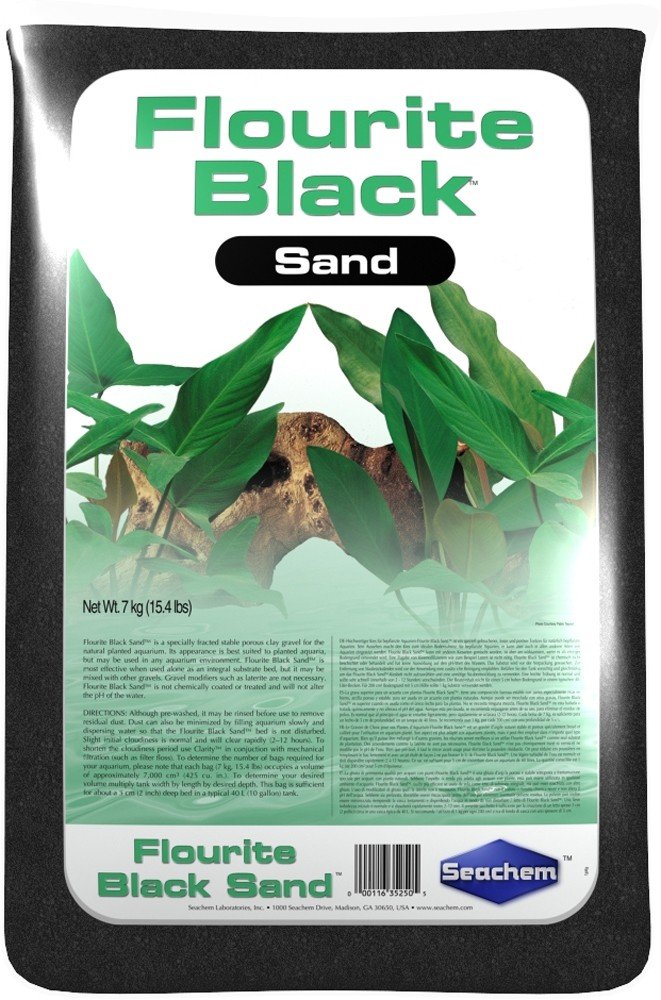
Rating: 4.5 ★ | Price: Premium | Grain Size: Fine sand | Type: Crushed clay (nutrient) | Dust Level: High | pH Effect: Inert
Flourite Black Sand delivers a dark, nutrient-rich bed that supports rapid plant rooting and high-contrast aquascapes. The fine sand is very dusty—rinsing is mandatory to avoid prolonged cloudiness, and grains may clog filters. For planted tank hobbyists, the result is worth the prep; for non-planted cichlid tanks, this premium substrate is overkill.
Pros
- Supports strong root development and lush plant growth in planted tanks.
- Creates a dramatic dark background that enhances contrast of plants and fish.
Cons
- Requires extensive pre-rinsing to prevent weeks of cloudy water—a significant time investment.
Best for planted tank enthusiasts who don’t mind messy setup; skip for non-planted cichlid tanks.
Best for Small Decorative Tanks
YISZM Natural River Gravel 5 lb

Rating: 4.6 ★ | Price: Premium | Grain Size: ~6 mm | Type: Polished river pebbles | Dust Level: Low | pH Effect: Inert
These polished river pebbles have a natural multicolor look that works well in nano tanks, terrariums, or as a topper for potted plants. The 1/4-inch grain size is pleasant to handle, but the per-pound cost runs higher than plain natural gravels, and the mixed colors don’t match the uniform substrate most cichlid keepers prefer. For a small accent setup or dry use, they do the job; for a full cichlid tank, you can find better value with a consistent tone.
Pros
- Natural smooth stones with a pleasing mix of earthy colors.
- Works in aquariums, terrariums, and as a plant topper.
Cons
- Expensive per pound compared to similar uncoated gravels.
This is a good decorative option for small tanks or houseplants, but cichlid keepers wanting uniform, affordable substrate should look elsewhere.
How to Choose
The most important decision is choosing an inert, natural substrate that won’t alter pH or leach toxins – coated gravels are a known hazard.
Grain Size
Grain size affects both fish behavior and maintenance. African cichlids enjoy digging, so a substrate that stays put without being too heavy is ideal. Gravel in the 2–4 mm range works well – it’s heavy enough to resist constant churning but light enough for cichlids to move around.
Fine sand (<1 mm) is softer on fish but gets easily sucked up during vacuuming and can cloud the water if disturbed. For most cichlid tanks, 1–3 mm gravel offers the best balance of diggability and easy cleaning.
Natural vs. Coated
Coated or dyed gravels are common, but their paint can flake off, especially under cichlid digging. This exposes fish to toxins and has led to many reports of sudden deaths within hours of adding the gravel.
Natural, inert substrates (sand, uncoated gravel, crushed coral) don’t have this risk. They also maintain a more consistent appearance over time and won’t leach anything into the water. Stick with brands that explicitly state the material is natural stone or sand.
Dust and Cloudiness
Even ‘pre-washed’ natural substrates often contain fine dust that can turn a tank cloudy for days. Rinsing thoroughly until the water runs clear is essential – skimping here is the top cause of post-setup cloudiness.
Some products are cleaner than others. Look for reviews that mention minimal rinsing required. If you see frequent complaints about persistent cloudiness, consider a different brand or grain size.
pH Neutrality
African cichlids need a pH between 7.8 and 8.5, so any substrate that lowers pH is unsuitable. Most natural gravels and sands are inert and have no effect on pH. Avoid peat-based or soil-based substrates designed for Amazon biotopes.
Crushed coral or aragonite sand buffers pH upward, which can be beneficial for rift lake cichlids. If your water is already alkaline, inert substrates are safer because they don’t add extra buffering that might overshoot.
FAQ
Why did my fish die after I added new aquarium gravel?
If the gravel is coated or dyed, the paint can flake off and release toxins into the water. This is especially common with brightly colored or cheap decorative gravels. Remove the gravel immediately and perform a large water change; switch to an inert natural substrate going forward.
Can I use sand instead of gravel for African cichlids?
Yes, sand works well for many cichlids, especially species that sift through the substrate. Fine sand (<1 mm) is gentle on fish but can be tricky to vacuum without sucking it up. For heavy diggers like mbuna, 1–3 mm gravel is less likely to cause suspension and cloudiness.
How do I get rid of cloudy water after putting in new substrate?
Cloudiness is usually from fine dust that wasn’t rinsed out. If you didn’t rinse enough, drain the tank and rinse the substrate in a bucket until the water runs clear. For minor cloudiness, run a fine filter pad and wait 24–48 hours – it should settle. Avoid adding chemical clarifiers until mechanical filtration has a chance.
What is the best grain size for African cichlid substrate?
For most African cichlids, 2–4 mm gravel hits the sweet spot: heavy enough to resist constant digging but not so large that waste gets trapped. Avoid very fine sand if you plan to use a gravel vacuum regularly, as it will be pulled out. Larger pebbles (over 5 mm) can trap debris and make cleaning harder.