This post contains affiliate links. We may earn a small commission when you buy through our links — at no extra cost to you.
Many aquarium products come with flashy claims—instant cycling, stainless steel that never rusts, glow effects. But real-world use often tells a different story.
The key is knowing which products reliably deliver and which ones trade off safety for aesthetics. This guide cuts through the hype to highlight what actually works for your tank’s specific needs.
Whether you’re cycling a new tank, decorating for bettas, or maintaining a shrimp colony, the right choice depends on understanding the hidden trade-offs in every product category.
Top Picks
Best for New Tank Setup
API QUICK START 4 oz

Rating: 4.8 ★ | Price: $ | Product Type: Bacterial starter | Use Case: New tank cycling, maintenance | Reliability & Safety: Non-toxic, fish-safe | Volume/Quantity: 4 oz | Ease of Maintenance: Simple dosing
API Quick Start speeds up the nitrogen cycle in both freshwater and saltwater aquariums, cutting the time before fish can be added. The liquid bacteria formula is designed for initial cycling, not as a maintenance stabilizer, which sets it apart from products aimed at established tanks. Large review volume supports its core claim, but effectiveness can vary between tanks, so monitoring ammonia and nitrite levels remains essential.
Some users see no change in water parameters despite following instructions, and a minority report temporary cloudiness after dosing – both are worth knowing before purchase. This makes Quick Start a tool for aquarists who test regularly and understand that no bacteria product guarantees instant results. It fits best for new setups where the goal is to jumpstart the cycle, not for sensitive tanks that require ultra-predictable bacterial colonization.
Pros
- Speeds up the nitrogen cycle in new tanks, reducing wait time before adding fish.
- Works in both freshwater and saltwater aquariums with consistent dosing.
- Budget-friendly price for a widely used bacteria starter.
Cons
- Water cloudiness can occur after dosing but typically resolves within a day.
- Cycling effect may not be noticeable in every tank despite correct use, so water testing is necessary.
The right pick for aquarists starting a new tank who are willing to test water parameters and accept that no bacteria product is a magic cure.
Best for Established Tank
Seachem Stability 16.9 oz

Rating: 4.8 ★ | Price: $$ | Product Type: Bacterial stabilizer | Use Case: Established tank maintenance | Reliability & Safety: High reputation, fish-safe | Volume/Quantity: 16.9 oz | Ease of Maintenance: Easy dosing
Seachem Stability is formulated to maintain biofilter health after routine water changes and filter cleanings, reducing the risk of new tank syndrome in established aquariums. Unlike the top pick, which is designed for initial cycling, Stability works best when the tank’s nitrogen cycle is already running. This makes it a fit for aquarists who want ongoing biological stability rather than a quick start for a new setup.
Pros
- Stabilizes biofilter after water changes and filter cleaning
- Supports fish health by reducing ammonia spikes
- Concentrated formula provides long-lasting supply
Cons
- In some tanks, surface biofilm can develop
Seachem Stability is the right call for maintaining biofilter in an already cycled tank — not a substitute for a cycle starter.
Best for Betta Health
SunGrow Catappa Leaves 50pk
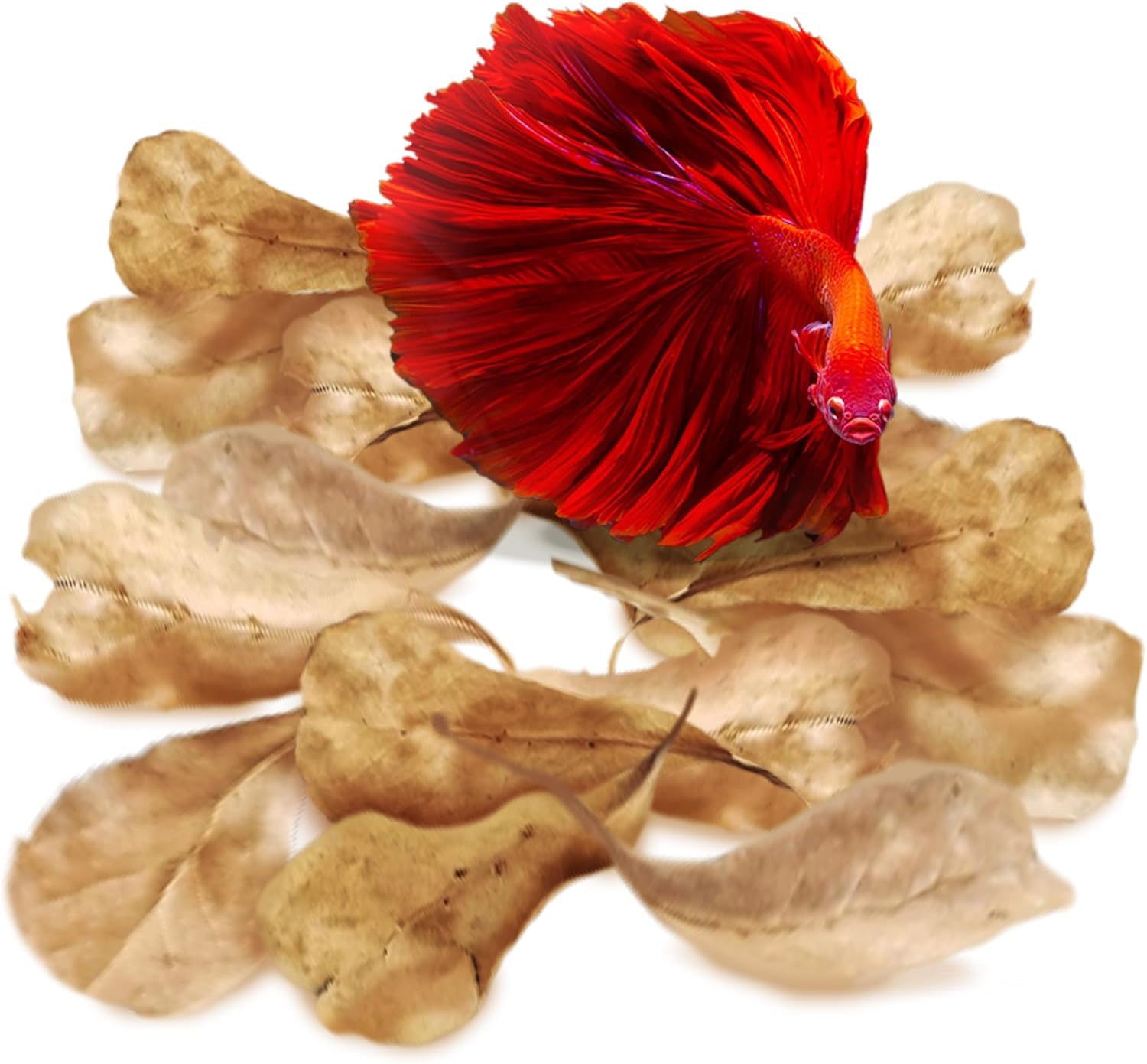
Rating: 4.5 ★ | Price: $ | Product Type: Natural leaves | Use Case: Betta health, blackwater | Reliability & Safety: Natural, safe for bettas | Volume/Quantity: 50 leaves | Ease of Maintenance: Boil or soak
These Indian almond leaves release tannins that lower pH and reduce stress in bettas and shrimp, helping replicate natural blackwater conditions. Best for hobbyists who can work around occasional batch variability — boiling the leaves for a few minutes can extract tannins if no water color change occurs.
Pros
- Releases tannins that promote betta health and mimic natural habitats
- Good quality leaves at a budget-friendly price for 50 pieces
Cons
- Leaves are smaller than pictured; may need more than expected for desired tint
For budget-conscious betta keepers seeking natural blackwater benefits, this pack offers solid value despite the need to adjust expectations on leaf size and occasional batch tannin release.
Best for Desk Display
Marineland Portrait 5 Gal

Rating: 4.4 ★ | Price: $$ | Product Type: Tank kit | Use Case: Small desk display, betta | Reliability & Safety: May leak, noisy pump | Volume/Quantity: 5 gallon | Ease of Maintenance: Filter cleaning needed
The Marineland Portrait brings a modern curved-glass look to any desk or shelf, with easy setup and hidden filtration that keeps the view clean. Its compact footprint fits small spaces, but the tall, narrow shape limits horizontal swimming — more suited to a single betta or shrimp with flow adjustment. In quiet rooms, the filter pump noise will be present, so this tank appeals to hobbyists who value aesthetics over silence and are ready to add a baffle for delicate fish.
Pros
- Sleek curved glass design that stands out visually.
- Easy to set up with hidden filtration for a clean look.
- Compact 5-gallon footprint fits small desks and shelves.
Cons
- Some units may develop pump failure or leaks within the first year.
A stylish nano kit for display, best for those who prioritize aesthetics over quiet operation and are comfortable with small adjustments.
Best for Beginner Aquascaping
Ohtomber 4-Piece Kit

Rating: 4.6 ★ | Price: $ | Product Type: Tool set | Use Case: Beginner aquascaping | Reliability & Safety: Rust-prone, not fully stainless | Volume/Quantity: 4 tools | Ease of Maintenance: Dry immediately after use
The Ohtomber kit delivers sturdy tools for basic freshwater aquascaping at a budget-friendly price, with slightly better build quality than the cheapest alternatives. The set includes straight and curved tweezers, scissors, and a spatula, covering most needs for plant trimming and tank cleaning. The main tradeoff is that the tools can rust if not dried thoroughly after use, making them best suited for occasional tasks and beginners who will care for them properly.
Pros
- Sturdy construction handles routine aquarium and terrarium tasks.
- Good value as a complete 4-piece set versus buying tools individually.
Cons
- Scissors may be dull and fail to cut cleanly on thicker plant stems.
A practical starter set for freshwater beginners who will dry tools after use, offering solid value at a low price.
Best for Temp Checks
PAIZOO Digital Thermometer

Rating: 4.5 ★ | Price: $ | Product Type: Thermometer | Use Case: Temp monitoring | Reliability & Safety: Adhesive may fail | Volume/Quantity: Single unit | Ease of Maintenance: Stick on glass
This digital thermometer provides clear temperature readings via an external LED display, accurate within a degree. The non-replaceable battery limits long-term use, making it best for quick checks rather than continuous monitoring. The external sensor avoids submersion, and the LED is easy to read from a distance. For occasional use on small tanks, it’s a functional budget option.
Pros
- Temperature readings match other thermometers within a degree.
- Large LED digits are readable from across the room.
Cons
- Adhesive may lose grip on textured tank surfaces over time.
A good pick for budget-conscious hobbyists who need a quick-read external thermometer for occasional checks and accept the limited battery life.
Best for Easy Greenery
MyLifeUNIT Seaweed 10pk

Rating: 4.5 ★ | Price: $ | Product Type: Artificial plants | Use Case: Easy greenery | Reliability & Safety: Soft leaves, bases light | Volume/Quantity: 10 pieces | Ease of Maintenance: Rinse, weight down
These 12-inch artificial seaweed plants add a bright green accent without the upkeep of live plants. The soft plastic is gentle on fish fins and encourages exploration in community tanks. Over time, some leaves may detach from the stems, so these are best suited for low-interaction setups rather than heavily rearranged aquascapes.
Pros
- Vibrant green color adds visual appeal to the tank.
- Soft plastic leaves are safe for fish to swim through.
Cons
- Leaves can detach from stems over time, reducing the full look.
A budget-friendly choice for adding no-fuss greenery to a peaceful community tank, provided you can accept occasional leaf separation.
Best for Small Fish Shelter
SpringSmart Hideaway Rock

Rating: 4.5 ★ | Price: $ | Product Type: Ceramic cave | Use Case: Small fish hiding | Reliability & Safety: Smooth edges, fragile shipping | Volume/Quantity: Single cave | Ease of Maintenance: Rinse, inspect
This ceramic cave offers a natural rock look with smooth edges that won’t snag delicate fins — a safe hiding spot for bettas, guppies, or shrimp in small tanks. At roughly the size of a softball, it fits only nano environments (5 gallons or less) and some units can arrive with chips or cracks, so inspection on delivery is wise. For larger inhabitants or robust decor needs, look elsewhere.
Pros
- Smooth edges safe for delicate fish like bettas and shrimp.
- Natural rock appearance blends well in small planted tanks.
Cons
- Some units arrive chipped or cracked during shipping, requiring inspection before use.
Grab this cave for a nano tank (5 gallons or under) where a small, smooth hideaway is needed, but be sure to check for damage when it arrives.
Best for Shrimp Hiding
JIH Ceramic Shelters 2pk

Rating: 4.6 ★ | Price: $ | Product Type: Ceramic shelters | Use Case: Shrimp, community fish | Reliability & Safety: Sharp edges, fragile | Volume/Quantity: 2 shelters | Ease of Maintenance: Sanding recommended
These ceramic rocks add character with their natural stone texture and stackable design. The porous surface benefits shrimp by encouraging biofilm growth. However, sharp edges inside the skull can injure fish, and the ceramic may chip during shipping — buyers seeking decorations for bettas or long-finned fish should look elsewhere or plan to sand rough areas.
Pros
- Natural stone texture adds visual interest to aquascapes.
- Solid ceramic construction feels substantial for the price.
Cons
- Sharp edges inside the cave may harm fish with delicate fins; inspection and sanding recommended.
A budget-friendly choice for shrimp tanks or short-finned community setups, provided you sand any rough spots before use.
Best for Shrimp Shell Health
SunGrow Shrimp Rocks

Rating: 4.4 ★ | Price: $ | Product Type: Mineral rocks | Use Case: Shrimp shell health | Reliability & Safety: Natural, may cloud water | Volume/Quantity: 60 grams | Ease of Maintenance: Rinse before use
These small rocks provide calcium and magnesium that help shrimp molt successfully and maintain shell health. Shrimp and snails graze on the surface, making it a natural-looking addition to a nano tank. The bag contains only a few small rocks, so it’s a modest amount for the price, and the water may cloud if the rocks aren’t rinsed before use. This works well for hobbyists focused on small shrimp setups where mineral supplementation is needed, but it’s not ideal for larger tanks or anyone sensitive to temporary cloudiness.
Pros
- Supports successful molting and shell health in shrimp.
- Attracts shrimp and snails to graze, adding natural interest.
Cons
- Small bag size may feel underwhelming for the price.
A budget-friendly mineral supplement for small shrimp tanks, provided you’re okay with a small pack size.
How to Choose
The most important factor is matching the product to your specific tank setup and goals.
Product Type
The type of product you need depends on where you are in the tank lifecycle. Bacteria starters, decorations, tools, and tank kits each serve a distinct stage.
Choosing the wrong type—like a maintenance stabilizer when you need a quick cycle starter—can delay progress. Match the product to your current task.
Use Case
Every product is optimized for a specific use case. Bacteria supplements differ for initial cycling vs. ongoing maintenance; decorations vary for bettas, shrimp, or community fish.
Using a product outside its intended use case often leads to disappointment. A leaf meant for betta health won’t help shrimp molting, and a tool set designed for occasional use will rust under daily heavy use.
Reliability and Safety
Marketing claims often outpace reality. ‘Stainless steel’ tools still rust if not dried, painted gravel can flake and harm fish, and ceramic caves may have sharp edges.
Prioritize products with proven track records from transparent user feedback. If a product has widespread reports of rust or fish deaths, it’s a safety risk regardless of how good it looks.
Volume and Quantity
Larger bottles or packs often offer better value per use, but only if you actually need that much. A 16.9 oz bacteria stabilizer is cost-effective for a large tank but wasteful for a nano tank.
For specialty items like mineral rocks or catappa leaves, smaller quantities are fine for testing before committing to a bulk purchase.
Ease of Maintenance
Some products require extra steps to be safe or effective. Artificial plants with weighted bases need burying, digital thermometers need adhesive checks, and ceramic decor may need sanding.
Consider your willingness to perform these steps. A product that needs daily drying or frequent adjustments may not suit a low-maintenance hobbyist.
FAQ
Can API Quick Start really let me add fish immediately?
No, it’s not a magic bullet. API Quick Start accelerates the nitrogen cycle but you should still test water parameters before adding fish. Most users find it works best when combined with regular monitoring over 1–2 weeks.
Why does my stainless steel aquarium tool have rust spots after one week?
Most budget ‘stainless steel’ tools are made from 304 or 430 grade that rusts if not dried immediately. Rinse and dry tools completely after every use to prevent corrosion. For longer life, consider higher-grade stainless or titanium.
Will GloFish gravel harm my fish if it’s not rinsed perfectly?
The problem isn’t just rinsing—multiple reports indicate the paint flakes over time, causing fish deaths even after thorough rinsing. It’s safest to avoid this product entirely for any tank with live fish.
How do I keep my Marineland Portrait tank filter quiet?
Noise often comes from the pump vibrating against the tank or running with low water. Ensure the pump is fully submerged, clean the intake, and add a foam baffle to reduce flow. If it persists, consider replacing the pump with a quieter aftermarket model.